
Best Natural Ingredients for Spicy BBQ Rubs
Table of Contents
- Why Natural Ingredients Make Better Spicy BBQ Rubs
- Natural Heat Sources: Chiles, Peppers, and Spices That Bring the Burn
- How to Balance Heat in BBQ Rubs Without Losing Flavor
- Natural Sugar Alternatives for BBQ Seasoning
- Smoky Bases and Savory Depth: Paprika, Cumin, and Dried Herbs
- Salt, Texture, and Application: Getting the Ratio Right
- Storing and Customizing Your Spicy BBQ Rubs
- Frequently Asked Questions
Last Updated: September 10, 2026
Why Natural Ingredients Make Better Spicy BBQ Rubs
The best natural ingredients for spicy bbq rubs are whole dried chiles, granulated garlic and onion, toasted whole spices, and unrefined sugars, because each one contributes flavor compounds that pre-ground blends lose to oxidation. This guide breaks down how those ingredients work together, so a cook can build a rub around heat instead of hiding behind it.
Commercial rubs often lean on anti-caking agents, silicon dioxide, and cheap fillers that dilute flavor and add nothing to crust formation. Natural ingredients skip that problem. A dry rub built from real chile powder, whole coriander seed, and demerara sugar delivers aroma, color, and a clean burn that holds up through a long smoke.
Below, the guide covers heat sources, balance, sugar alternatives, and application ratios, with a comparison table to help match a blend to the meat in front of you.
Natural Heat Sources: Chiles, Peppers, and Spices That Bring the Burn
Heat in a barbecue rub comes from capsaicin, the compound concentrated in the pith and seeds of chile peppers (peer-reviewed research). But treating every spicy ingredient as interchangeable is the most common mistake in rub building. Heat arrives in distinct phases, and each phase does different work on the plate and in the smoker.
Three Kinds of Heat: Immediate, Lingering, and Smoky
Most rubs group cayenne, black pepper, and chipotle under one label and call it done. Separating them by how the burn behaves gives a cook far more control.
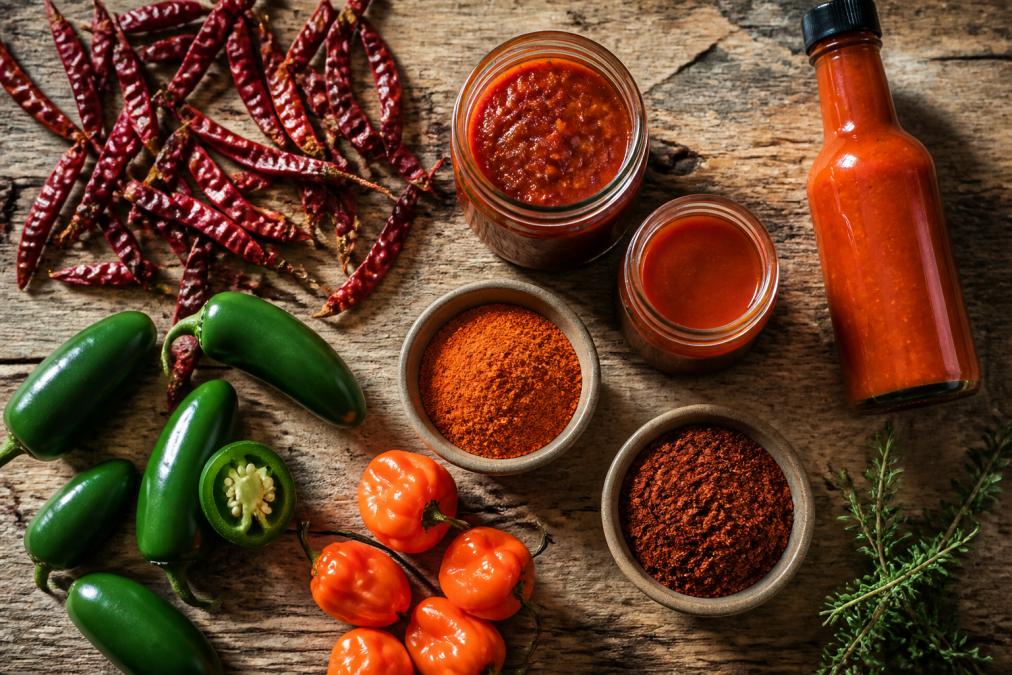
- Immediate heat hits the front of the palate and fades quickly. Cayenne is the clearest example: clean, direct, and gone in a few seconds. It is the workhorse of spicy bbq rubs because it adds intensity without dragging a flavor profile behind it.
- Lingering heat builds slowly and stays. Black pepper supplies piperine, a different compound from capsaicin that registers earlier on the tongue and then sits at the back of the throat (PubMed). Chile de Arbol adds a sharper, brighter burn with a grassy note that also hangs around longer than cayenne.
- Smoky heat trades raw intensity for depth. Chipotle, a smoked jalapeño, brings wood-fired character and a moderate burn that reads as warmth rather than a spike. It layers under the other two instead of competing with them.
A blend built on all three phases tastes more complete than one built on a single powder, because the burn moves across the palate instead of landing in one spot.
Building a Heat Stack
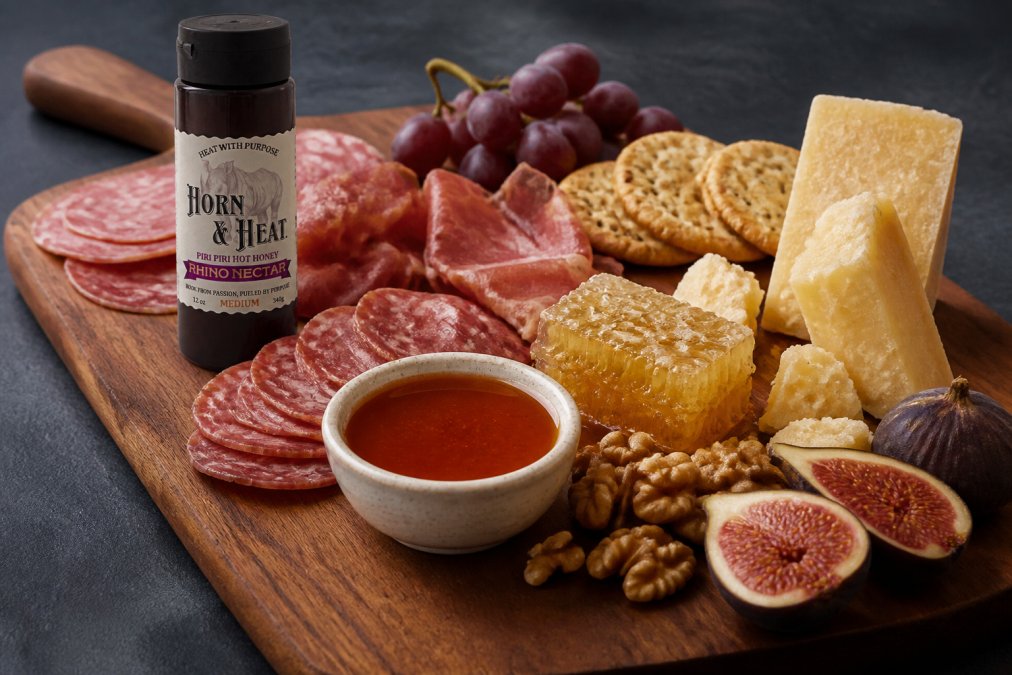
A practical approach is to treat the three phases as a stack. Use cayenne as the base for immediate intensity, layer chile de Arbol for brightness and a longer finish, and add chipotle for smoke and depth. Cooks who want a fruitier, more layered finish can look to African Bird's Eye Pepper, the chile behind piri piri, which appears in Rhino Nectar Piri Piri Hot Honey as a slow-building heat under wildflower honey.

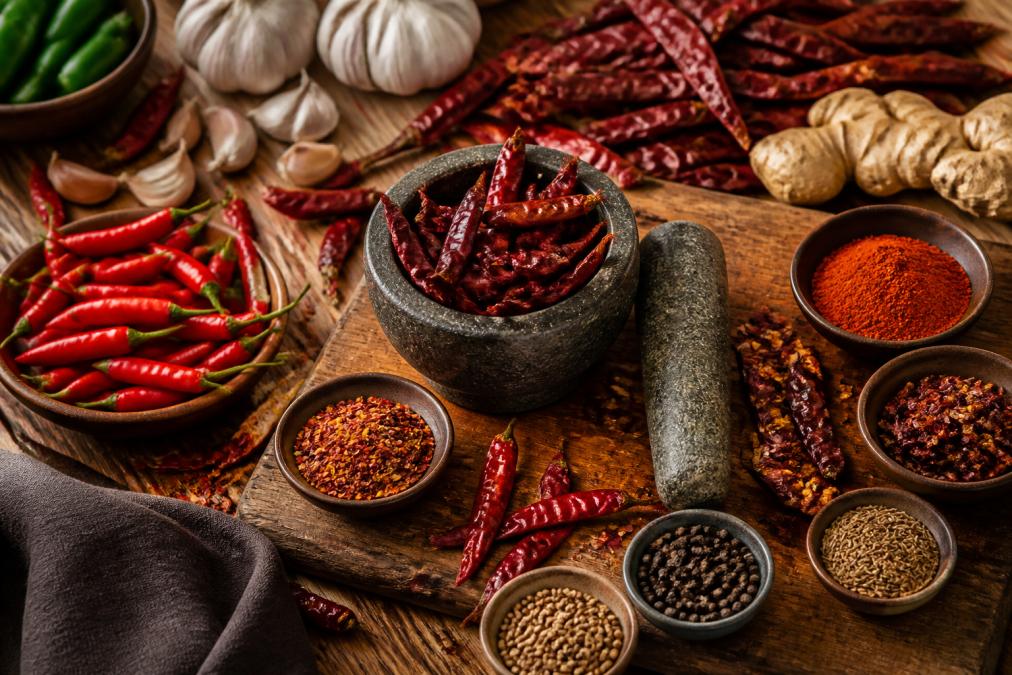
Whole Spices That Add Layered Pungency: Mustard Seed, Coriander, and Black Pepper
Whole spices carry pungency that powders cannot match once they sit on a shelf. Mustard seed adds a sharp, horseradish-like bite that fades fast in ground form. Coriander seed contributes citrus and floral notes that round out chile heat. Black pepper supplies piperine, a different kind of burn that hits the palate earlier than capsaicin.
Toasting whole coriander and mustard seed in a dry pan before grinding wakes up their oils. The USDA guide to spices and herbs notes that whole spices retain their volatile oils far longer than ground versions, which is why grinding small batches matters.
How to Balance Heat in BBQ Rubs Without Losing Flavor
Balancing heat is about matching capsaicin against fat, acid, and sweetness so the burn sits inside the flavor instead of on top of it. A rub that reads as pure pain usually lacks one of those three counterweights. But balance also depends on what happens to the spices once they hit heat, and that part rarely gets explained.
The Counterweights
Sweetness softens the initial bite. Fat carries capsaicin and spreads it across the palate, which is why fatty cuts like pork shoulder tolerate more heat than lean chicken breast. Acid, added through a spritz or finishing sauce rather than the rub itself, cuts through richness and resets the palate between bites.
The common mistake is chasing heat with more chile powder when the blend actually needs more salt or sugar. Salt amplifies perceived flavor across the board, and a rub that tastes flat often just needs a higher salt ratio, not another spoon of cayenne.
What Heat Does to Dry Spices During the Cook
A dry rub is not static once it goes on the meat. As surface temperature climbs, the volatile oils that carry a spice's aroma begin to evaporate, and the sugars in the blend start to brown. This is why a rub can smell vivid going on and taste flat coming off.
Different spices tolerate that heat differently. Ground chile powders and dried herbs are the most fragile, since their oils are already exposed by grinding and they have the least structure to protect them. Whole spices that were toasted and ground fresh hold up longer because their oils were released closer to the cook. Sugars are the most heat-sensitive component of all: they drive bark formation through the Maillard reaction, but past a certain surface temperature they turn bitter rather than brown.
The practical takeaway is sequencing. Sugar-heavy components belong closer to the cook or on lower-heat sections of the grill, while chile and herb components can go on earlier because they have less to lose. A blend that burns on the outside while tasting raw underneath usually has its sugar working against its spices.
Reading the Finished Bark
A crust that tastes sharp and one-dimensional often points to scorched sugar rather than too much chile. A crust that tastes dusty points to volatile oils that cooked off before the meat was done. Both problems are fixable by changing when each component goes on, not by changing how much of it goes in.
Natural Sugar Alternatives for BBQ Seasoning
Natural sugar alternatives for bbq seasoning range from brown sugar and demerara to maple sugar and honey powder, each with a different moisture level and caramelization point. Sugar drives bark formation through the Maillard reaction, so removing it entirely costs the crust its color and texture.
Brown sugar brings molasses and moisture, which helps a rub cling but can burn over high direct heat. Demerara and turbinado have larger crystals and less moisture, so they caramelize more slowly and suit long, low cooks. Maple sugar dissolves quickly and adds a rounder sweetness. Honey powder, available in specialty shops, contributes the floral note of honey without the stickiness of a liquid.
Cooks who want that honey character without a wet glaze can reach for Rhino Nectar Piri Piri Hot Honey, which layers floral sweetness under a slow-building heat and works as a finishing drizzle rather than a rub component.
Sugar |
Moisture |
Best For |
Burn Risk |
|---|---|---|---|
Brown sugar |
High |
Short cooks, ribs |
High over direct heat |
Demerara |
Low |
Long smokes, brisket |
Low |
Maple sugar |
Medium |
Poultry, pork |
Medium |
Honey powder |
Low |
Rubs needing floral notes |
Low |
Smoky Bases and Savory Depth: Paprika, Cumin, and Dried Herbs
Smoked paprika, cumin, and dried herbs give a spicy bbq rub its base notes, the low, savory layer that sits beneath the heat. Without them, a blend reads as one-dimensional regardless of how many chiles go in.
Smoked paprika contributes color and a sweet, wood-fired depth. Sweet paprika brightens; hot paprika adds another heat layer. Cumin brings an earthy, slightly bitter warmth that anchors chile-forward blends. Dried oregano and thyme add herbaceous top notes that lift the heavier spices and keep the rub from tasting muddy.
The ratio matters more than the ingredient list. A workable starting frame is roughly three parts paprika to one part cumin, with herbs at about half the cumin volume. From there, adjust toward the meat: beef takes more cumin, poultry takes more paprika and herbs, and pork sits comfortably between the two.
Salt, Texture, and Application: Getting the Ratio Right
Kosher salt should make up roughly a quarter to a third of a dry rub by volume, depending on whether the cook plans to dry-brine. Salt penetrates muscle tissue and seasons from within, while the spices sit on the surface and form the bark.
Texture separates a rub that clings from one that slides off. Granulated garlic and onion flow more evenly than powdered versions and resist clumping in humid air. A coarse grind on the chile and pepper gives the crust something to grab.
Application technique decides how much of that work pays off:
- Pat the meat dry so the rub adheres instead of steaming.
- Apply a thin binder such as mustard or oil if the surface is slick.
- Sprinkle from height for even coverage, then press gently.
- Rest the seasoned meat in the refrigerator so salt can penetrate.
- Add sugar-heavy components closer to the cook to limit scorching.
Storing and Customizing Your Spicy BBQ Rubs
Homemade rubs keep their punch for about three to six months in an airtight container stored away from light and heat. After that, the volatile oils fade and the blend tastes dusty even though it is technically safe to eat.
Customizing comes down to matching the heat source and sugar to the meat and the cook. A few starting points:
- Beef brisket: ancho and chipotle base, heavy black pepper, demerara sugar, low burn risk over a long cook.
- Pork ribs: cayenne and chile de Arbol, brown sugar, a sweeter profile that caramelizes under moderate heat.
- Chicken: smoked paprika and cayenne, maple sugar, applied closer to the cook to protect the skin.
- Vegetables: cumin and coriander forward, minimal sugar, a lighter dusting so the natural sweetness shows.
For cooks who want the finished heat handled for them, the Horn & Heat Sweet Heat Bundle pairs Rhino Nectar with a hot sauce chosen by heat level, and the Horn & Heat Starter Hot Sauce and Hot Honey Pack covers a full range from mild to bold.


Label every jar with the date and the chile ratio. A blend that worked at three parts paprika to one part cumin is worth repeating, and a written record is the only way to repeat it.
Building a rub that balances real heat against real flavor takes practice, and sourcing ingredients that hold their character makes the difference between a blend that sings and one that just burns. Horn & Heat approaches that same balance through chef-crafted sauces built for cooking, from mild to bold, with every bottle supporting rhino conservation through the Rockwood Conservation Fund. Explore the Horn & Heat hot sauce lineup and find the heat level that fits the next cook.
Frequently Asked Questions
What are the best natural spices to add heat to a BBQ rub?
Cayenne pepper delivers clean, direct heat. Chile de arbol brings sharp pungency. Chipotle powder adds smoky heat. Mustard seed and black pepper contribute layered warmth. For a fruitier burn, try dried habanero or African Bird's Eye pepper. Combine two or three sources rather than relying on one, so the heat has dimension instead of a flat spike. Start with smaller amounts and adjust upward as you taste.
How do I balance heat in BBQ rubs so the spice doesn't overpower the meat?
Pair every heat source with something sweet, acidic, or savory. Brown sugar, honey powder, or demerara sugar round off sharp edges. Smoked paprika and cumin add depth that competes with capsaicin for your attention. Kosher salt amplifies flavor without adding burn. A general starting point is one part heat source to two parts sweet or savory elements, then adjust based on your palate and the meat you're seasoning.
Are there natural sugar alternatives for BBQ seasoning if I want to avoid refined sugar?
Yes. Demerara sugar, coconut sugar, maple sugar, and raw turbinado all work. Each brings its own moisture level and caramelization behavior, so you may need to adjust quantities slightly. For a sugar-free option, try powdered dried fruit like date or fig, or lean on naturally sweet spices such as cinnamon and allspice. These alternatives still help with crust formation and flavor balance without refined white sugar.
How should I store homemade spicy BBQ rubs to keep them fresh?
Keep rubs in an airtight container away from heat, light, and moisture. A glass jar with a tight-fitting lid works well. Store in a cool, dark cabinet rather than above the stove. Whole spices stay potent longer than pre-ground, so grind in small batches. Most homemade rubs hold peak flavor for three to six months. Label with the date so you know when to mix a fresh batch.
Can I customize a spicy BBQ rub for different meats?
Absolutely. Beef handles bolder heat and heavier black pepper. Pork pairs well with sweeter profiles and fruit-based heat like chile powder blended with brown sugar. Chicken works with brighter, herb-forward rubs that include dried oregano and granulated garlic. For fish, keep heat mild and lean on citrus zest and smoked paprika. The same base blend can shift dramatically with small adjustments to the heat and sweet components.