
How to Pair Spicy Rubs With Smoked Meats
Table of Contents
- Start With the Meat, Not the Heat
- The Best Dry Rubs for Smoked Meat: A Flavor-First Starting Point
- Spices That Complement Smoked Meats (and the Ones That Fight Them)
- Build the Rub: Balancing Spicy, Sweet, Smoky, Salty, and Savory
- How Long to Leave Dry Rub on Meat Before It Hits the Smoker
- Pairing Spicy Rubs by Meat Cut and Cooking Duration
- Troubleshooting Bitter, Harsh, or Overpowering Rubs
- Conclusion
- Frequently Asked Questions
Last Updated: October 14, 2026
Start With the Meat, Not the Heat
The best way to pair spicy rubs with smoked meats is to match the rub to the meat's fat, cook time, and cut shape before thinking about heat. Get those three right and the heat level almost picks itself.
At Horn & Heat, the philosophy is simple: flavor first, heat second. A spicy rub is a chile-based blend whose job is to complement the meat, not bury it.
Why Fat, Cook Time, and Cut Shape Change Everything
Fat is the delivery system for spice.
Lean cuts work differently. Chicken breast and pork loin have little fat to buffer heat, so a heavy-handed rub reads hot fast.
Cook time matters too. Low and slow cooking mellows chile and lets smoke settle in, while quick grilling keeps more of the spice's raw edge.
Shape matters as well: a flat brisket has more surface area for bark, while a whole chicken has crevices that trap rub unevenly.
- Fatty cuts: bold, spicy rubs hold up
- Lean cuts: lighter coats, milder chile
- Long cooks: smoke and time soften heat
The Best Dry Rubs for Smoked Meat: A Flavor-First Starting Point
The best dry rubs for smoked meat start with a simple base: salt, sugar, and a chile powder, then build outward. Salt seasons, sugar helps bark form, and chile brings heat and color.
Here's a starting framework home cooks can adjust:
- Salt: the backbone of any rub
- Sugar: brown sugar for depth, white for clean sweetness
- Chile powder: ancho for mild, cayenne for punch
That mix covers the five notes most smoked meats need: spicy, sweet, smoky, salty, and savory.
Dry Rub vs. Wet Rub: Which One Holds Up to Long Smokes
Dry rubs win for long smokes. They form a crust, or bark, that wet rubs can't match, and they don't steam the surface the way a wet paste can. Wet rubs cling better to uneven cuts and suit shorter cooks. For a brisket or pork shoulder headed for hours in the smoker, a dry rub is the safer pick; for chicken thighs on a hot grill, a wet rub can work well.
Spices That Complement Smoked Meats (and the Ones That Fight Them)
Spices that complement smoked meats share a few traits: they're earthy, warm, or slightly sweet. Cumin, smoked paprika, black pepper, garlic, and brown sugar all play well with smoke.
Chile choice matters most, and not all chiles behave the same way once they hit the smoker. Ancho brings mild, fruity depth. Chipotle adds smoky heat. Cayenne delivers clean, sharp punch.
- Ancho chile: mild, fruity, great for beef
- Chipotle: smoky and medium-hot
- Cayenne: sharp heat, use with care
How Chile Varieties Behave During a Long Smoke
Chile powders do not hold their character evenly through a low-and-slow cook. Heat, sweetness, and smoke notes each move in a different direction.
Think about it by chile type:
- Ancho: Mild to begin with, and it softens further. Its raisin-like sweetness deepens and its fruity notes round out. It rarely turns bitter on its own, which makes it a forgiving base for long cooks.
- Chipotle: Already smoky from the drying process, so it layers with smoker smoke rather than fighting it. Its medium heat fades somewhat, but the smoke character can concentrate and read stronger than expected on a long brisket.
- Cayenne: The heat holds up better than most chiles. Where ancho and chipotle mellow, cayenne stays sharp, which is why a rub that tastes balanced raw can turn aggressive after hours in the smoker.
A common pattern is to build a rub slightly hotter than the final target, because cayenne and other sharp chiles will still be present after the mellow ones fade.
For more on how spices behave under heat and how to handle seasoned meat safely, the USDA food and nutrition guidance offers useful background on seasoning and food handling.
Build the Rub: Balancing Spicy, Sweet, Smoky, Salty, and Savory
Balancing a rub means keeping five notes in check: spicy, sweet, smoky, salty, and savory. Too much of any one flattens the rest.
Salt comes first, seasoning without dominating. Sugar comes next, in smaller amounts.
Chile and smoked paprika bring the spicy and smoky layers. Cumin, garlic, and black pepper handle the savory side.
A simple way to think about it:
- Salt sets the base
- Sugar adds balance and bark
- Chile brings heat
Sweet and spicy rubs work best when the sugar doesn't overpower the chile.
How Long to Leave Dry Rub on Meat Before It Hits the Smoker
The short answer: 30 to 60 minutes at room temperature is enough for most cuts. For deeper seasoning, refrigerate the rubbed meat for a few hours or overnight. Salt needs time to work into the meat, while sugar and spices mostly sit on the surface.
- 30 to 60 minutes: quick seasoning, good for chicken and ribs
- 2 to 4 hours: deeper flavor, good for pork and beef
- Overnight: strongest seasoning, best for large cuts
The USDA Food Safety and Inspection Service recommends keeping raw meat refrigerated during longer rests to stay safe.
Binder, Coverage, and How Much Rub Actually Sticks
A binder is a thin layer of oil, mustard, or another liquid that helps rub stick and helps bark form. Oil is the simplest; mustard adds tang that fades during cooking. Either way, a light coat is enough. Coverage matters more than quantity, so sprinkle from above, then press the rub in with clean hands.
- Use a light binder for even sticking
- Sprinkle, don't dump
- Press the rub into the surface
Pairing Spicy Rubs by Meat Cut and Cooking Duration
Pairing spicy rubs by cut and cook time keeps results consistent. Fatty cuts and long cooks handle bold heat, while lean cuts and short cooks need a lighter touch. The table below maps heat level to specific cuts.
Meat Cut |
Cook Time |
Rub Style |
Heat Level |
|---|---|---|---|
Brisket |
10-14 hours |
Bold, peppery, smoky |
Medium to hot |
Pork shoulder |
8-12 hours |
Sweet and spicy |
Medium |
Ribs |
4-6 hours |
Sweet, smoky, mild chile |
Mild to medium |
Pulled pork |
8-12 hours |
Savory with brown sugar |
Medium |
Smoked chicken |
2-4 hours |
Bright, mild chile |
Mild |
Chicken thighs |
1-2 hours |
Spicy with paprika |
Medium |
Pork loin |
2-3 hours |
Herb-forward, light chile |
Mild |
Beef short ribs |
6-8 hours |
Peppery, ancho-forward |
Medium |
Cut-Specific Notes That Change the Pairing
A brisket flat and a brisket point behave differently even though they come from the same animal.
Pork shoulder is forgiving because fat and connective tissue break down over a long cook, mellowing sharp chiles.
Chicken is where heat management matters most. Skin-on thighs can handle a medium rub because the fat under the skin buffers the chile, while skinless breast has almost no buffer, so a mild rub applied lightly is the better call.
Scaling Heat for a Mixed Table
Not everyone at the table wants the same level of burn, and a rub is hard to adjust once the meat is on the smoker. Smoke with a mild-to-medium base rub, then offer heat at the finish so one cook serves everyone.
- Base rub: Build the rub around ancho, paprika, and cumin with only a small amount of cayenne. This gives everyone a balanced starting point.
- Finish heat: Set out a hotter finishing option so those who want more can add it on the plate. A drizzle of Horn & Heat Rhino Nectar Piri Piri Hot Honey adds sweet-then-heat without overwhelming the smoke, and it works well on ribs, chicken, and grilled vegetables.
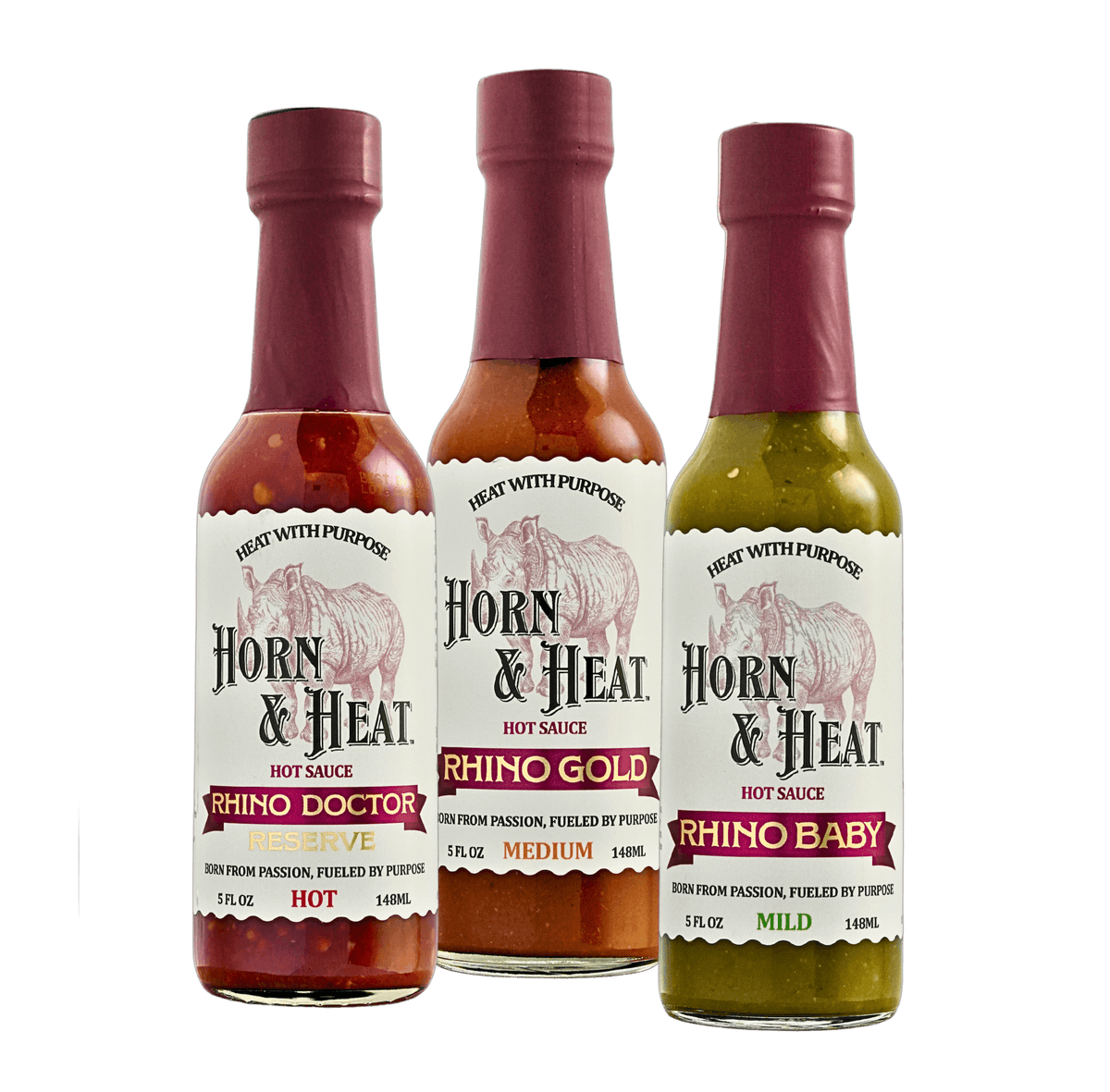
- Sauce on the side: The Horn & Heat Hot Sauce Trio offers a mild, medium, and hot option, so cooks can match the finish to the crowd without reworking the rub.
Rub Quantity and Timing by Cut
Coverage matters more than volume, but a rough guide helps: about 1 to 2 tablespoons of rub per pound for large cuts like brisket and pork shoulder, and slightly less for lean cuts like pork loin or chicken breast.
- 30 to 60 minutes: quick seasoning, good for chicken and ribs
- 2 to 4 hours: deeper salt penetration, good for pork and beef
- Overnight: strongest seasoning, best for large cuts
Whichever timing you choose, keep the rubbed meat refrigerated during longer rests. The USDA FSIS smoking and food safety guidance is a helpful reference for safe cooking temperatures and handling on smoked meats.
Troubleshooting Bitter, Harsh, or Overpowering Rubs
Bitter or harsh rubs usually come down to three causes: burnt sugar, too much chile, or old spices.
Burnt sugar is the most common. High heat and long cooks scorch sugar before the meat finishes.
Too much chile is next. A rub that tastes fiery raw only gets sharper on lean meat.
Old spices lose their balance. Stale chile powder tastes flat and dusty, so it can read harsh.
- Bitter: reduce sugar or lower heat
- Harsh: cut back on cayenne
- Overpowering: use less rub, more binder
A good finishing sauce can also rescue a rub that ran hot. The Horn & Heat Hot Sauce Trio offers a mild, medium, and hot option, so cooks can match the finish to the crowd.
Conclusion
Pairing spicy rubs with smoked meats comes down to reading the meat before the heat.
Start with a balanced base of salt, sugar, chile, and smoked paprika. Match the heat to the cut, then let time and smoke do the rest.
When a rub needs a finishing touch, Horn & Heat offers chef-crafted sauces and Rhino Nectar Piri Piri Hot Honey that bring balanced flavor to the plate.

Get started with Horn & Heat and bring balanced heat to every cookout.
Frequently Asked Questions
How long should a dry rub sit on meat before smoking?
For most cuts, 30 to 60 minutes at room temperature is enough for the rub to adhere and start drawing moisture to the surface, which helps bark form. Larger cuts like brisket or pork shoulder benefit from an overnight rest in the refrigerator, loosely covered, so the salt and spices can penetrate. Smaller items such as chicken wings or ribs can go straight to the smoker after 20 to 30 minutes. If you refrigerate, let the meat sit out briefly before smoking so it is not ice cold when it hits the heat.
Which spices complement the flavor of smoked meat best?
Smoked paprika, ancho chile, chipotle, cumin, black pepper, garlic, mustard powder, and brown sugar are the workhorses. Smoked paprika and ancho add depth without overwhelming heat, while chipotle brings a smoky, earthy burn. Cumin and black pepper round out savory notes, and brown sugar balances bitterness from long cooks. Cayenne works in small amounts to sharpen heat without masking the smoke. The goal is layering, not one spice dominating the others.
Should you apply a spicy rub before or after smoking meat?
Apply the rub before smoking. Spices need time on the surface to meld with the meat's moisture and form bark during the cook. A rub applied after smoking sits on top of the crust and tastes raw and gritty. If you want extra heat, add a finishing sauce or glaze in the last 15 to 30 minutes of the cook, when the surface is already set. That way the spice blooms without scorching.
How do you keep a spicy rub from overpowering the smoke flavor?
Balance heat with sweetness, salt, and fat. Use a mild chile base like ancho or smoked paprika and add cayenne or chipotle in small amounts. Brown sugar, honey, or a touch of mustard powder softens the burn and lets the smoke come through. Apply a thin, even coat rather than a heavy blanket, and taste the rub on its own before it goes on the meat. If it burns your tongue straight, it will bury the smoke.