
Is The Piri Piri Chili Very Spicy? Heat Guide
Table of Contents
- How Spicy Is Piri Piri Sauce? Scoville Scale Explained
- How to Balance Spicy Food When Cooking with Piri Piri
- Cooking with Piri Piri Sauce: Marinades, Glazes, and More
- Piri Piri Sauce vs. Other Hot Sauces: Where It Sits on the Heat Spectrum
Last Updated: August 25, 2026
Piri piri sauce is one of those condiments that people approach with equal parts curiosity and caution. Yes, piri piri sauce is genuinely spicy, but the heat is only part of the story. Understanding where it lands on the Scoville scale, how it compares to other hot sauces, and how to work with it in the kitchen makes all the difference between a dish that sings and one that overwhelms.
How Spicy Is Piri Piri Sauce? Scoville Scale Explained
Piri piri sauce is built around the African Bird's Eye chili, a small but potent red chili that registers between 50,000 and 175,000 Scoville Heat Units (acs.org). For context, a standard jalapeño sits around 2,500 to 8,000 SHU, a significant gap.

The bird's eye chili delivers a sharp, immediate burn that hits the front of the palate quickly. Most commercially prepared piri piri sauces blend the bird's eye chili with olive oil, herbs, garlic, and citrus, which tempers the raw pungency into something more layered and flavorful. According to the Scoville scale reference maintained by the American Chemical Society, capsaicin is the active compound responsible for the burning sensation in chili peppers. A well-balanced sauce that incorporates herbs, acid, and oil delivers heat that is assertive but manageable for most palates.
How to Balance Spicy Food When Cooking with Piri Piri
The biggest mistake with spicy food is treating heat as a one-dimensional problem. Knowing how to balance spicy food means understanding which cooking variables actually reduce perceived heat intensity.
Here is a practical framework for managing piri piri heat in the kitchen:
- Fat first. Capsaicin is fat-soluble, not water-soluble (peer-reviewed research). Adding dairy, coconut cream, or olive oil coats the palate and genuinely reduces burn.
- Dilute with volume. Mixing piri piri sauce into a larger quantity of marinade, glaze, or dressing distributes the heat across more surface area.
- Balance with sweetness. Honey, roasted garlic, or caramelized onion counteract the sharp heat.
- Use acid strategically. Citrus juice or vinegar rounds out the overall flavor profile, making the spiciness feel more integrated.
- Cook it in. Applying piri piri sauce during cooking rather than finishing with it allows some of the volatile heat compounds to dissipate while flavor stays.
For beginners with a lower heat threshold, starting with a smaller amount and tasting as you go is the most reliable approach.
Cooking with Piri Piri Sauce: Marinades, Glazes, and More
Piri piri sauce earns its place as a genuine cooking ingredient, not just a finishing condiment. The culinary applications are broad, and the sauce performs differently depending on when and how it is introduced into a dish.
As a marinade: The acidity in piri piri sauce helps tenderize proteins while the capsaicin penetrates the surface. Chicken, shrimp, and firm white fish are natural fits. Marinating for at least a few hours allows the flavor profile to develop beyond surface heat.
As a glaze: Applied in the final minutes of grilling or roasting, piri piri sauce caramelizes into a sticky, fiery coating that deepens the flavor and creates a glossy finish.
As a dipping sauce: Served alongside roasted vegetables, grilled meats, or bread, piri piri sauce functions as a traditional condiment. Thinning it slightly with olive oil makes it more approachable for guests with lower spice tolerance.
As a dressing base: Whisked with oil and a touch of honey, piri piri sauce becomes a zesty, spicy dressing that works across grain bowls, roasted vegetable plates, and grilled salads.
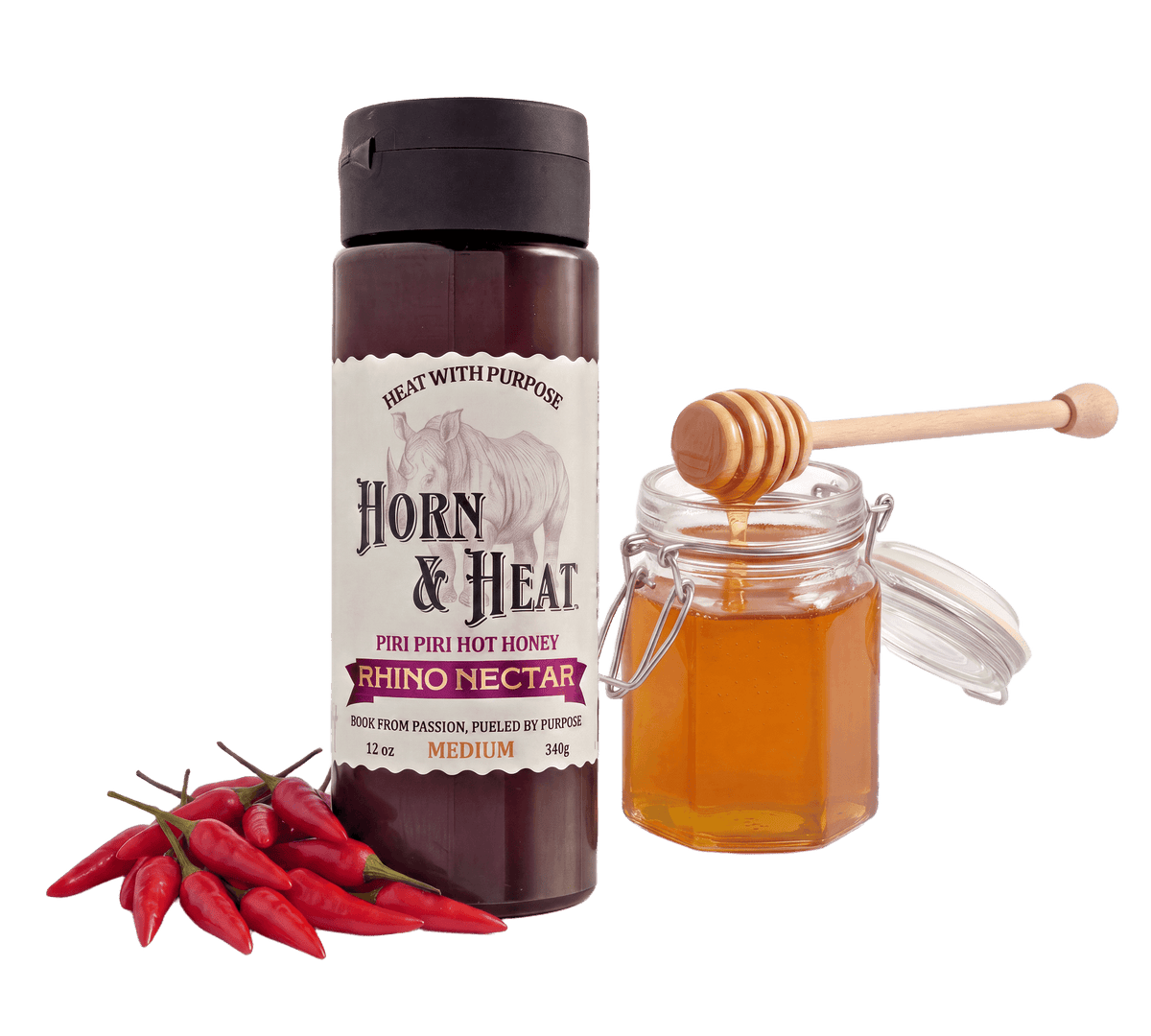
The Rhino Nectar Piri Piri Hot Honey from Horn & Heat combines wildflower honey with African Bird's Eye Pepper to create something that bridges the sweet and fiery. It works as a drizzle over fried chicken, pizza, roasted vegetables, or charcuterie, and it introduces piri piri flavor to dishes where a straight hot sauce would be too assertive.
Piri Piri Sauce vs. Other Hot Sauces: Where It Sits on the Heat Spectrum
Most people who ask whether piri piri sauce is very spicy are really asking how it compares to what they already know. Here is where piri piri sits relative to other common hot sauces.
Hot Sauce Style |
Approximate SHU Range |
Heat Character |
Common Use |
|---|---|---|---|
Mild Louisiana-style |
450 - 3,000 SHU |
Gentle, vinegary |
Finishing, wings |
Sriracha |
1,000 - 2,200 SHU |
Sweet, slow build |
Dipping, marinades |
Piri piri sauce |
50,000 - 175,000 SHU |
Sharp, immediate |
Marinades, glazes |
Habanero-based |
100,000 - 350,000 SHU |
Fruity, intense |
Cooking, hot dishes |
Ghost pepper sauce |
800,000+ SHU |
Extreme, delayed |
Chili-head use only |
Piri piri sauce sits well above most everyday hot sauces in terms of raw Scoville rating, but below the firebombs of the ghost pepper and Carolina Reaper category. What distinguishes piri piri from other hot sauces at a similar heat level is the flavor profile. The authentic blend of bird's eye chili with herbs and citrus produces a condiment that is tangy, aromatic, and savory alongside the heat. For home cooks building a hot sauce collection, piri piri sauce fills a specific gap: more heat intensity than everyday mild sauces, more culinary versatility than extreme heat products, and a flavor profile that holds up throughout the cooking process.
Managing heat in the kitchen is a skill, and piri piri sauce rewards those who take the time to understand it. For those who want to explore piri piri flavor across both sweet and savory applications, the Horn & Heat Sweet Heat Bundle pairs Rhino Nectar Piri Piri Hot Honey with a choice of hot sauce from mild to bold. Shop the full range at hornandheat.com.
Frequently Asked Questions
Is piri piri sauce hotter than sriracha?
Piri piri sauce is generally hotter than sriracha. Sriracha typically measures around 1,000–2,500 Scoville Heat Units (SHU), while piri piri sauce, built on African bird's eye chilies, can range from roughly 50,000 to 175,000 SHU depending on the recipe and chili concentration. The heat in piri piri also tends to be sharper and more immediate, whereas sriracha delivers a milder, slightly sweeter burn. That said, many commercial piri piri sauces are blended to moderate heat levels for broader palates.
What does piri piri sauce taste like?
Piri piri sauce has a bright, tangy, and zesty flavor with a sharp heat that builds quickly. The bird's eye chili base delivers pungency and intensity, while ingredients like olive oil, citrus, garlic, and herbs add depth and a slightly smoky, savory character. The overall flavor profile is more complex than pure heat — it is fiery but also acidic and aromatic, which is why it works well as a marinade, dipping sauce, and finishing condiment across a wide range of dishes.
Can you adjust the spice level of piri piri sauce in cooking?
Yes. Mixing piri piri sauce with honey, yogurt, or a fat like butter or olive oil reduces the heat intensity without stripping the flavor. Using it as a marinade rather than a direct finishing sauce also mellows the burn, since heat disperses through the dish during cooking. For beginners, starting with a small amount and building gradually is the most practical approach. Products like Rhino Nectar Piri Piri Hot Honey combine piri piri heat with floral sweetness, offering a more approachable entry point.
This article was written using GrandRanker