
Premium Finishing Sauces for Professional Plating
Table of Contents
- Why Finishing Sauces Matter in Professional Plating
- Understanding Sauce Viscosity and Consistency for Plating
- Essential Tools and Equipment for Culinary Plating Techniques for Home Cooks
- Choosing the Best Squeeze Bottles for Sauce Plating
- How to Smear Sauce on a Plate Like a Professional
- Plating Techniques That Highlight Sauce-to-Protein Ratios
- Common Plating Mistakes and How to Avoid Them
- Conclusion
Last Updated: August 28, 2026
Why Finishing Sauces Matter in Professional Plating
The difference between a home-cooked meal and restaurant-quality plating often comes down to one detail: how the sauce is presented. A well-executed sauce application signals intention and craft, telling the diner that every element on the plate was considered carefully. Finishing sauces add flavor complexity, create textural contrast, and establish visual balance while guiding the eye across the dish.
Horn & Heat's approach to sauce creation reflects this philosophy. Each sauce is formulated for versatility across the cooking process, including as a finishing element. The balanced flavor profiles are designed to complement proteins and vegetables without overwhelming them, making them ideal for professional plating techniques.
Understanding Sauce Viscosity and Consistency for Plating
Viscosity, the thickness or flow resistance of a liquid, is the most critical factor in determining how a sauce will behave on a plate. The ideal viscosity sits in the middle: thick enough to hold its shape, fluid enough to move with intention. Most finishing sauces benefit from slight reduction to achieve the right consistency.
Testing and Adjusting Viscosity
Before committing sauce to the plate, test its behavior. Dip a spoon into the sauce and let it drip back into the pot. If it falls in a thin stream, it needs reduction. If it clings to the spoon without flowing, it's too thick. The right consistency will fall in a slow, controlled stream while maintaining body.
If a sauce is too thin, return it to low heat and simmer gently until it thickens. If it's too thick, thin it gradually with water, stock, or a complementary liquid such as citrus juice or vinegar. Add liquid in small increments, a tablespoon at a time, and retest.
Addressing Broken or Separated Sauces
Emulsion-based sauces can separate during cooking or storage, appearing grainy, oily, or curdled. Try whisking vigorously off heat for 30 seconds to a minute. If that doesn't work, start fresh with a small amount of sauce base in a clean bowl, then slowly whisk in the broken sauce a little at a time. For sauces that have become grainy due to heat, strain them through a fine-mesh sieve, then gently reheat over low heat while whisking.
Temperature's Role in Viscosity
Temperature directly affects how a sauce flows. Warm sauces flow more readily than cold ones. For best results, bring sauce to room temperature or warm it gently (around 110-120°F) just before plating (peer-reviewed research). Test the sauce's behavior on a practice plate before applying it to the finished dish.
Essential Tools and Equipment for Culinary Plating Techniques for Home Cooks
Professional plating doesn't require professional-grade equipment, but it does require tools designed for precision. The right tools give home cooks the control needed to execute techniques that would otherwise feel frustratingly difficult.
Squeeze Bottles and Precision Applicators
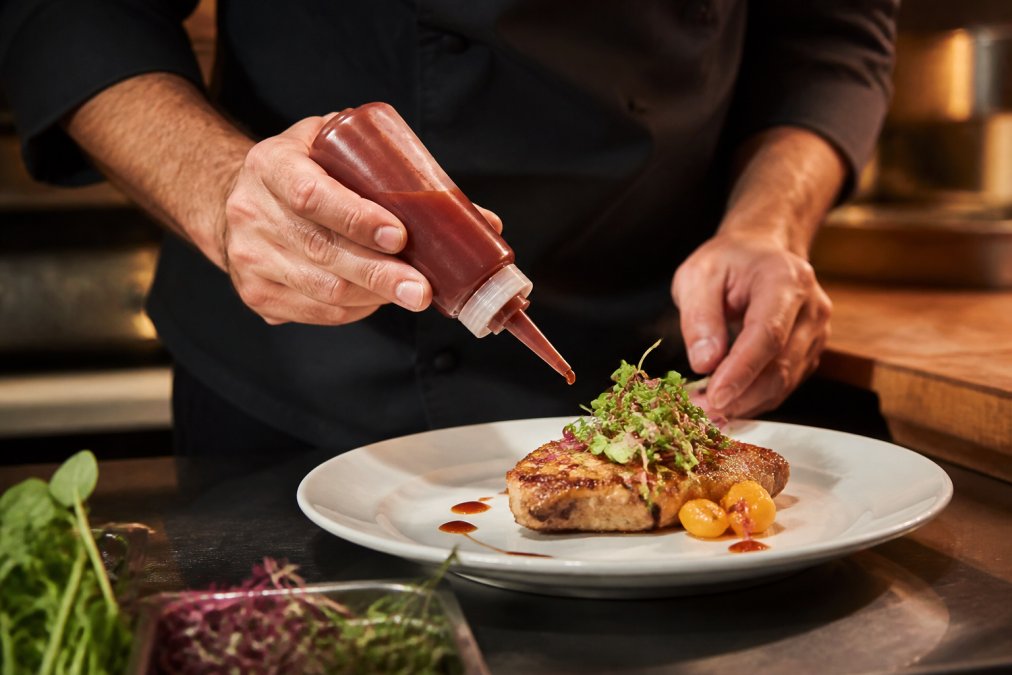
Squeeze bottles are the foundation of sauce application. A good squeeze bottle should have a fine-tipped nozzle (typically 2-4mm) that delivers sauce smoothly without sputtering. The bottle itself should be firm enough to control pressure precisely. For home cooks, a set of 2-3 squeeze bottles with different nozzle sizes covers most plating needs: one fine nozzle for delicate work, one medium for general application, and one wider nozzle for bolder strokes.
Offset Spatulas and Smearing Tools
An offset spatula is a flat, angled blade essential for smearing and spreading sauces across the plate. The offset design gives the cook control without the blade digging into the sauce. The blade should be thin and flexible; a 4-6 inch blade is practical for most plating work. Some cooks prefer metal blades for durability, while others like silicone for easier cleanup.
Choosing the Best Squeeze Bottles for Sauce Plating
Look for bottles with fine-pointed nozzles (2-3mm diameter) that deliver a steady, consistent stream. The nozzle should be removable for thorough cleaning. The bottle body should be firm enough to control pressure precisely. Food-grade plastic is standard and affordable, but stainless steel bottles offer better durability and temperature control.
Capacity should match typical plating needs. A 4-6 ounce bottle is ideal for home cooking, large enough to reduce refilling frequency, small enough to handle comfortably. Test the nozzle before committing to a bottle. A good nozzle should allow sauce to flow smoothly without sputtering or spraying.
How to Smear Sauce on a Plate Like a Professional
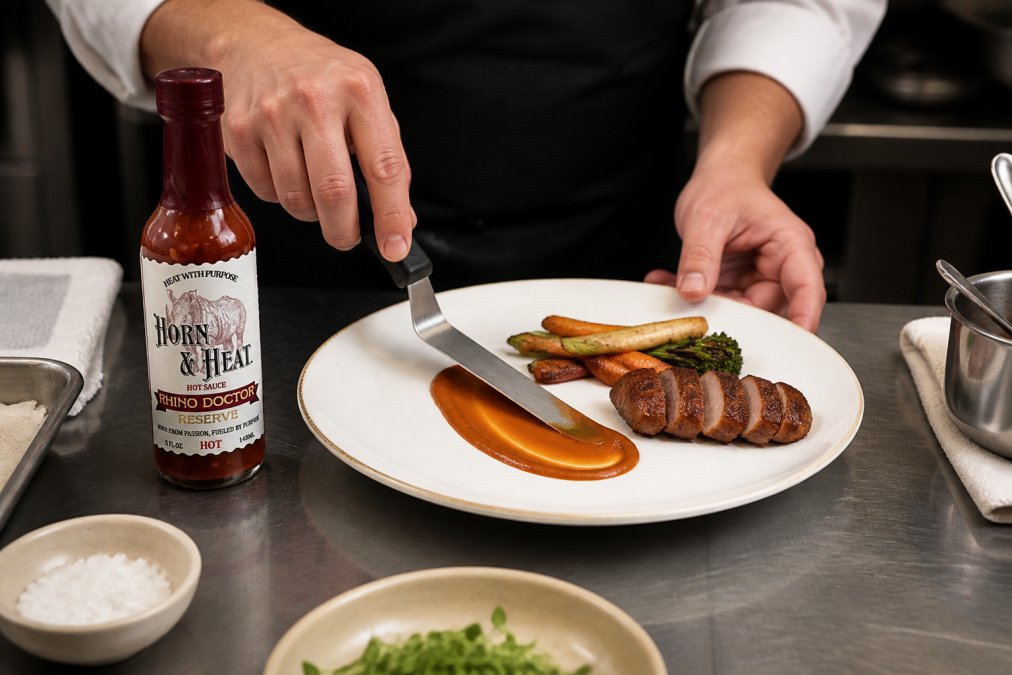
Smearing sauce is one of the most elegant and approachable plating techniques. It requires only an offset spatula and a sauce with the right consistency.
Creating Elegant Streaks and Dots
Start with a small amount of sauce on the plate, roughly a teaspoon for a thin streak, a tablespoon for a thicker smear. Place the offset spatula at a shallow angle to the plate surface (about 15-20 degrees). Press gently and drag the spatula across the plate in one smooth motion. Consistent pressure and speed are key; hesitation creates uneven lines.
Dots are equally straightforward. Use a squeeze bottle with a fine nozzle. Hold the bottle perpendicular to the plate and squeeze gently, releasing pressure before lifting to prevent tailing. Varying dot size adds sophistication. Combining streaks and dots creates visual complexity without requiring advanced technique.
Balancing Flavor and Aesthetics
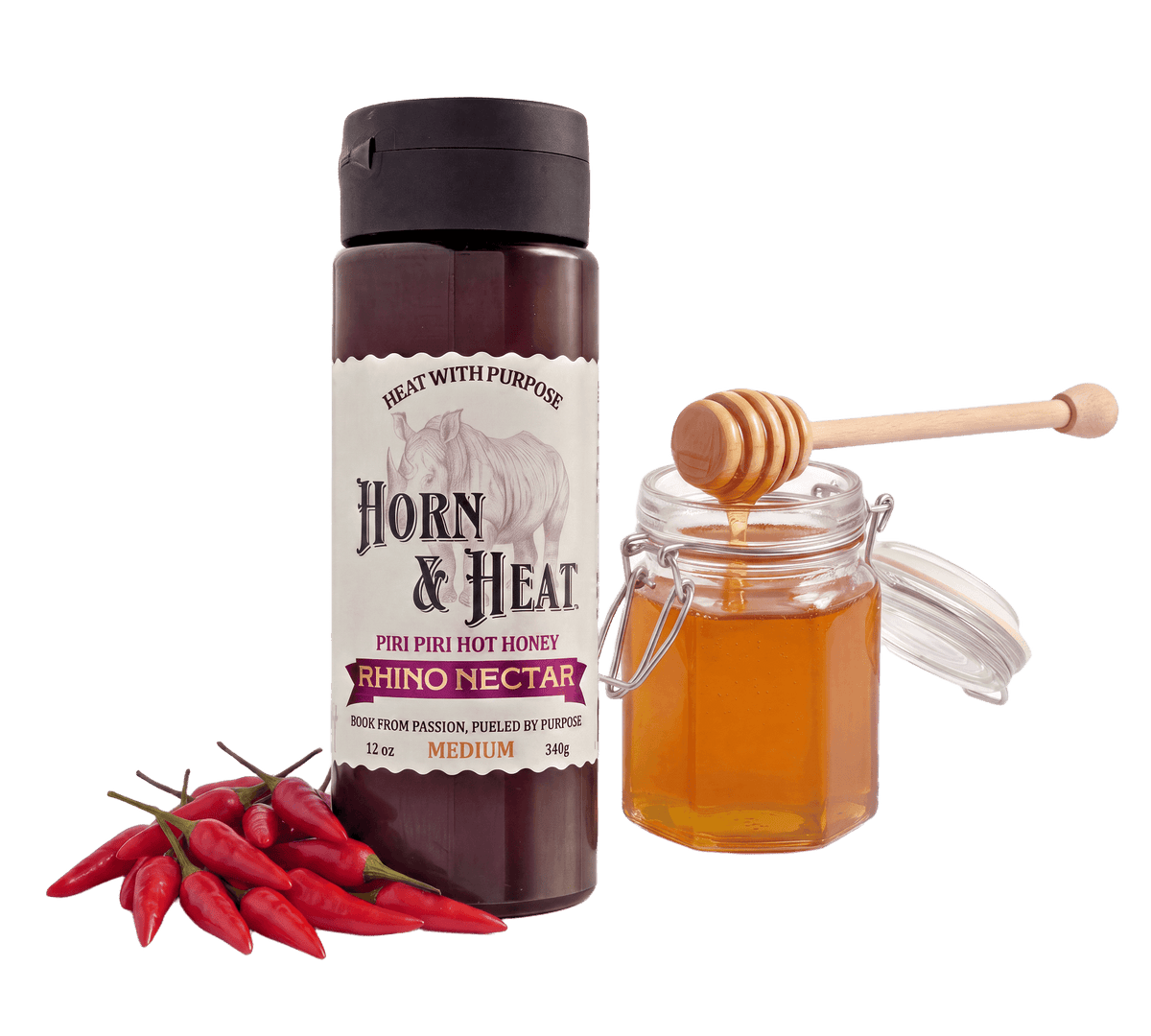
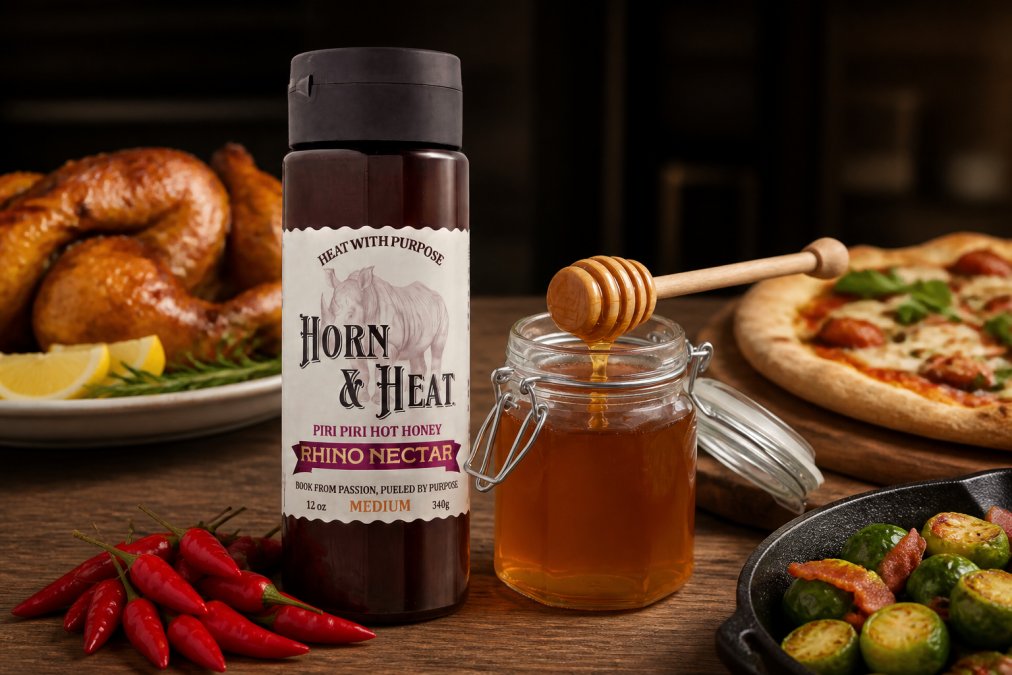
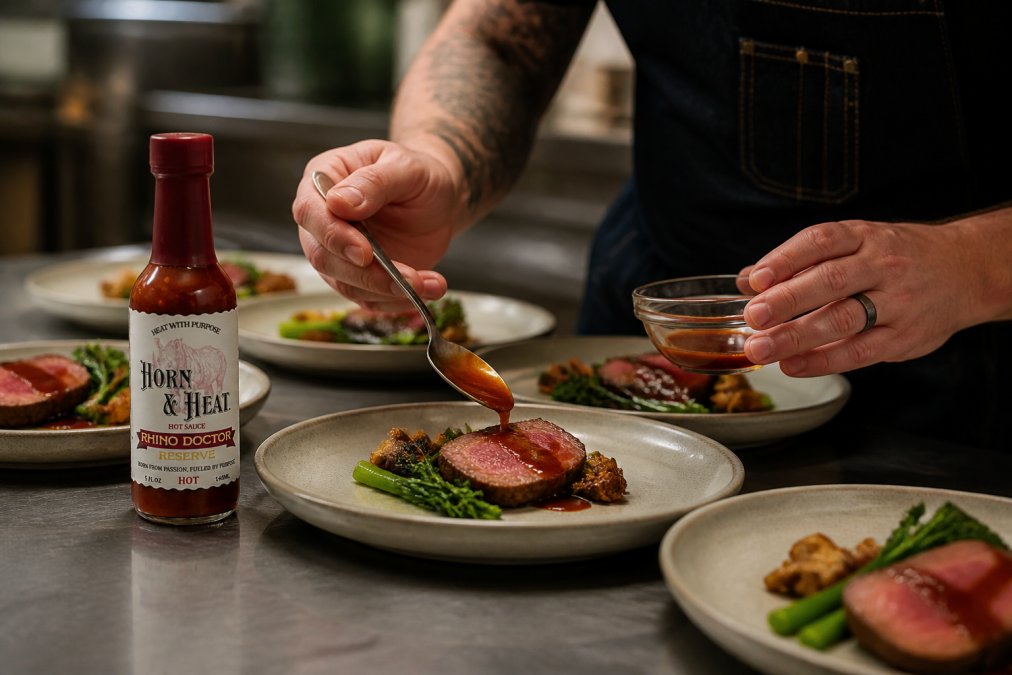
The visual presentation of sauce should never compromise its flavor contribution to the dish. A finishing sauce should enhance the proteins and vegetables already on the plate, not compete with them. Premium finishing sauces like Rhino Doctor Reserve Hot Sauce and Rhino Nectar Piri Piri Hot Honey are formulated with this balance in mind, balanced flavor and moderate heat complement without overwhelming.


Consider the plate's existing colors and flavors when deciding where to place sauce. If the protein is pale, a darker sauce creates contrast. If the plate is already visually busy, a subtle application adds refinement without clutter. The sauce should feel like an intentional design choice, not an afterthought.
Plating Techniques That Highlight Sauce-to-Protein Ratios
The proportion of sauce to protein matters far more than most home cooks realize. Too much sauce overwhelms the main ingredient and masks its flavor. Too little makes the sauce feel incidental. The ideal ratio depends on the sauce's intensity, the protein's delicacy and richness, and how the diner will interact with the dish.
Understanding Sauce Intensity and Protein Pairing
A bold, concentrated sauce requires restraint. A lighter, more delicate sauce can occupy more space without overwhelming because its flavor is subtle enough to complement rather than compete.
Match sauce intensity to protein richness. A fatty protein like salmon or beef can handle a bolder sauce in larger quantity. A delicate protein like white fish or chicken breast pairs better with lighter sauces applied more sparingly.
Placement Strategy and Flavor Delivery
Three placement strategies serve different purposes:
Underneath the protein: Placing sauce beneath allows it to soak in and contribute from the first bite. Use a thin layer or smear.
Alongside the protein: Placing sauce to the side creates visual separation and allows the diner to control sauce consumption with each bite. This is the most versatile approach.
On top of the protein: Placing sauce on top adds visual impact and creates an intentional design statement. This works best with sturdy proteins and sauces that won't slide off immediately. Use restraint.
Adjusting Ratios for Cooking Method
A protein that's been braised or stewed has already absorbed liquid and developed deep flavor; it typically needs less finishing sauce. A protein that's been grilled or roasted, with a dry exterior, benefits from more sauce to add moisture and richness. A poached or steamed protein often pairs well with a more generous sauce application.
Consider also the plate's other components. If the plate includes a rich starch, reduce the sauce proportion slightly. If the plate is primarily protein and vegetables with minimal starch, a slightly more generous sauce application adds necessary richness and cohesion.
The Visual Balance Test
Before plating the actual dish, do a dry run. Arrange the protein and vegetables on the plate, then imagine where the sauce will go and how much space it will occupy. The plate should feel balanced, no single element should dominate visually or flavor-wise. When in doubt, use less sauce. It's far easier to add more sauce to a plate than to remove it.
Common Plating Mistakes and How to Avoid Them
The most common mistake is using sauce that's the wrong consistency. Testing consistency before plating by observing how the sauce falls from a spoon prevents this problem entirely.
Another frequent error is applying too much sauce. Restraint is more sophisticated than abundance. A small amount of sauce applied with precision looks intentional and professional.
Inconsistent technique creates uneven results. Taking time to execute each stroke smoothly and consistently makes a visible difference in the final presentation. Ignoring temperature is another common oversight. Room temperature or slightly warm sauce typically performs best.
Many home cooks also overlook the importance of plate choice. A white or light-colored plate shows sauce colors and lines clearly. The plate's size and shape should complement the dish. Finally, apply sauce last, just before the dish reaches the table, to ensure it looks its best when the diner sees it.
Frequently Asked Questions
Q: What sauces work best for professional plating?
A: Premium finishing sauces with balanced viscosity and bold flavor profiles work best for plating. Look for sauces with complex taste that complement your protein without overwhelming it. The sauce should be thick enough to hold its shape on the plate but fluid enough to create clean lines and dots. Sauces with fermented depth and layered spice add sophistication to any dish.
Q: Why do restaurants use finishing sauces for plating?
A: Finishing sauces serve three purposes in professional plating: they add flavor contrast, create visual interest, and guide the diner's palate through the dish. A well-placed sauce smear or dot draws the eye, defines negative space on the plate, and delivers concentrated flavor in each bite. This technique transforms a simple plate into a composed dish that tells a story.
Q: What tools do I need to achieve restaurant-quality sauce plating at home?
A: Start with a quality squeeze bottle with a fine tip for precision, an offset spatula for smearing, and a small spoon for dotting. A squeeze bottle gives you control over sauce placement, while an offset spatula creates smooth, intentional streaks. Keep a damp cloth nearby to wipe edges and maintain clean plating. These basic tools are all you need to elevate your presentation.
Q: How do I fix a sauce that's too thin or too thick for plating?
A: If your sauce is too thin, reduce it gently over low heat for a few minutes to concentrate flavor and thicken the consistency. If it's too thick, whisk in small amounts of water or stock until you reach the right viscosity. The ideal consistency should flow slowly from a squeeze bottle and hold its shape without spreading across the plate. Test on a spare plate before plating your final dish.
Professional plating elevates everyday cooking into something memorable. The techniques are learnable, the tools are accessible, and the impact is immediate. Premium finishing sauces designed with balanced flavor and versatility, like those from Horn & Heat, make this process easier by providing sauces that work beautifully both in the kitchen and on the plate. Start with quality tools, practice the basic techniques, and let careful attention to detail transform how your dishes look and taste.
This article was written using GrandRanker