
Versatile Hot Sauces for Home Cooks: 2026 Guide
Table of Contents
- What Makes a Hot Sauce Versatile in a Home Kitchen
- The Four Qualities That Separate a Cooking Sauce From a Table Condiment
- Quick Comparison: Versatile Hot Sauces for Home Cooks
- Cooking With Hot Sauce: Building Flavor in the Pan, Not Just on the Plate
- The Best Hot Sauce for Marinades, Glazes, and Dressings
- How Heat Levels and Flavor Profiles Shape the Dish
- Troubleshooting Heat Balance and Dietary Pairings
- Frequently Asked Questions
Last Updated: October 15, 2026
What Makes a Hot Sauce Versatile in a Home Kitchen
Versatile hot sauces for home cooks move between the pan, the marinade bowl, and the table without losing their balance. The best carry flavor first and heat second, which is why this guide treats them as cooking ingredients rather than condiments.
The Four Qualities That Separate a Cooking Sauce From a Table Condiment
Four traits decide whether a bottle earns counter space: balance, body, acidity, and ingredient integrity.
- Balance: Heat sits alongside salt, sweetness, and acid instead of dominating them. Rhino Gold Hot Sauce is the clearest example in the Horn & Heat lineup, a medium-heat sauce developed by Chef Bri Coelho that complements tacos, grilled meals, and pasta sauce without overwhelming the palate.
- Body: A sauce with some viscosity clings to food and emulsifies into pan sauces. Thin, watery sauces slide off and pool on the plate.
- Acidity: Vinegar-based sauces brighten rich dishes and cut through fat. Acidity also acts as a preservative, which is why vinegar is a base ingredient in so many shelf-stable sauces.
- Ingredient integrity: Fresh ingredients and real pepper varieties show up in the flavor. Chili extract, by contrast, delivers raw heat with little aromatic character.
Quick Comparison: Versatile Hot Sauces for Home Cooks
The table below maps the Horn & Heat range by heat level and best use so home cooks can match a bottle to how they cook.

Product |
Heat Level |
Best For |
Price |
|---|---|---|---|
Rhino Baby Hot Sauce |
Mild |
Everyday cooking, gentle heat, bright fresh flavor |
$14.99 |
Medium |
Marinades, glazes, dressings, pasta sauce, grilled meals |
$14.99 |
|
Rhino Doctor Reserve Hot Sauce |
Hot |
Bold, complex, slow-building heat for finishing and cooking |
$14.99 |
Rhino Nectar Piri Piri Hot Honey |
Sweet with slow-building heat |
Pizza, fried chicken, biscuits, roasted vegetables, charcuterie |
$14.99 |
Hot Sauce Trio |
Mild to hot |
Experiencing the full range in one purchase |
$44.99 |
Mild to hot plus sweet heat |
A sauce for nearly every meal |
$59.99 |
|
Sweet Heat Bundle |
Choose your heat plus hot honey |
Pairing hot honey with a preferred heat level |
$29.99 |
Cooking With Hot Sauce: Building Flavor in the Pan, Not Just on the Plate
Heat belongs at two points in the cooking process. Adding sauce early builds depth as it reduces and melds with other ingredients; adding it at the end preserves the volatile aromatics that keep a sauce bright.

Where Heat Belongs in the Cooking Process
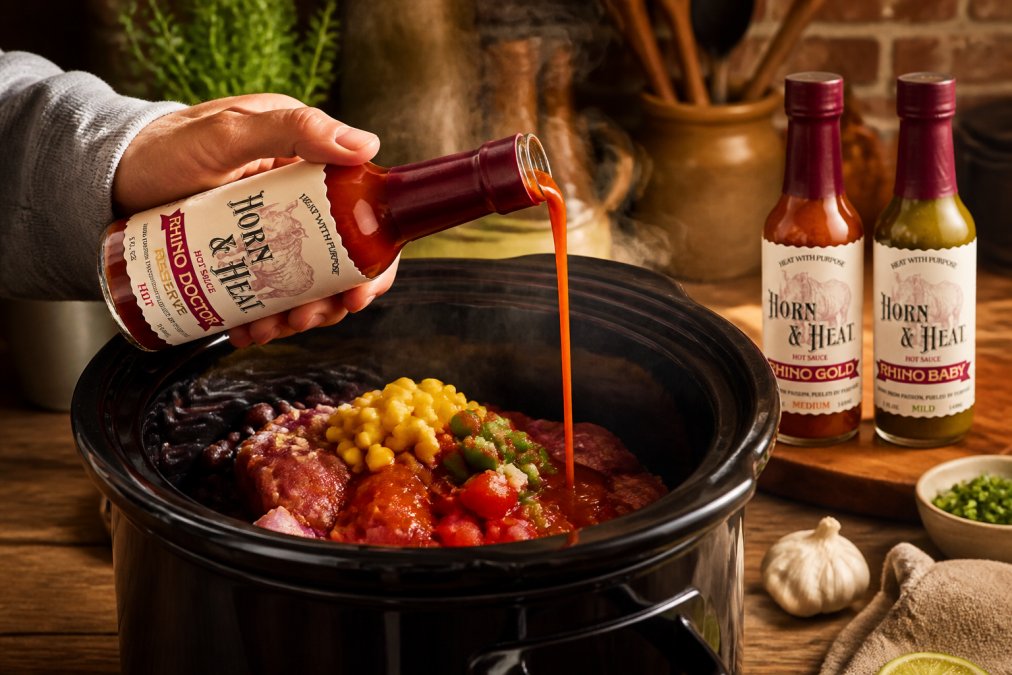
Early addition suits long-simmering dishes. A spoonful stirred into chili, a braise, or a tomato sauce at the start contributes background warmth that reads as part of the dish rather than a topping.
The Best Hot Sauce for Marinades, Glazes, and Dressings
The best hot sauce for marinades has enough acidity to penetrate and enough body to cling, which is why a medium, balanced sauce outperforms an extreme one here. Rhino Gold Hot Sauce fits that brief: it works as a vibrant dressing, and its balanced profile complements rather than dominates.

Hot Sauce as an Ingredient, Not a Condiment
Four applications show the difference:
- Marinades: The sauce needs acidity to carry flavor into the food and enough body to stay in contact with the surface. A vinegar-forward, medium-heat sauce does this without overwhelming the protein. Reserve a portion before it touches raw meat so you have a clean finishing sauce.
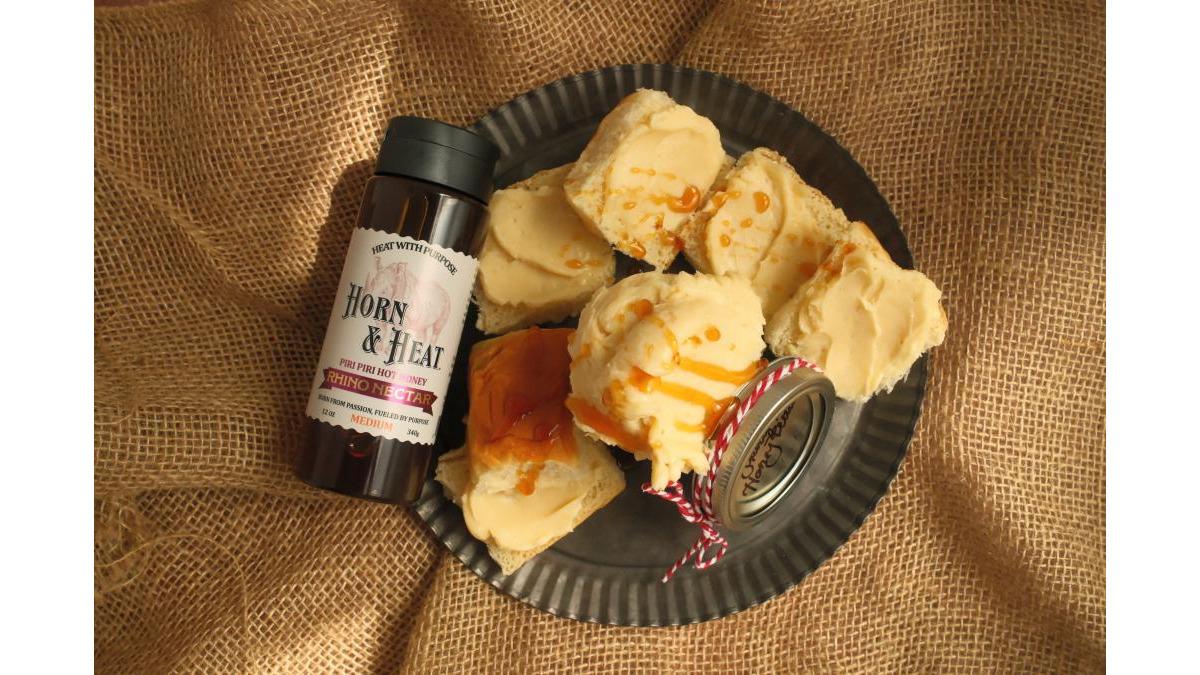
- Glazes: Glazes need sweetness to caramelize and a sauce that can take direct heat without turning bitter. Rhino Nectar Piri Piri Hot Honey does that work on roasted vegetables, grilled foods, and fried chicken, where the honey's floral sweetness balances the Bird's Eye heat.
- Dressings and vinaigrettes: Whisking a vinegar-based sauce into oil with a little mustard or honey holds the emulsion together and gives salads, grain bowls, and slaws a backbone of heat and acidity. The sauce replaces part of the vinegar rather than sitting on top of it.
- Compound butters and finishing fats: Softened butter mixed with a spoonful of sauce becomes a finishing fat for steaks, fish, and roasted vegetables. Because capsaicin is fat-soluble, the heat distributes evenly through the butter instead of pooling.
Matching the Sauce to the Cut and the Cooking Method
- Chicken thighs and wings: Glaze near the end of grilling or roasting so the sugars caramelize without scorching.
- Flank steak and skirt steak: Marinate for a few hours, then finish with a fresh drizzle for contrast between cooked-in depth and bright top notes.
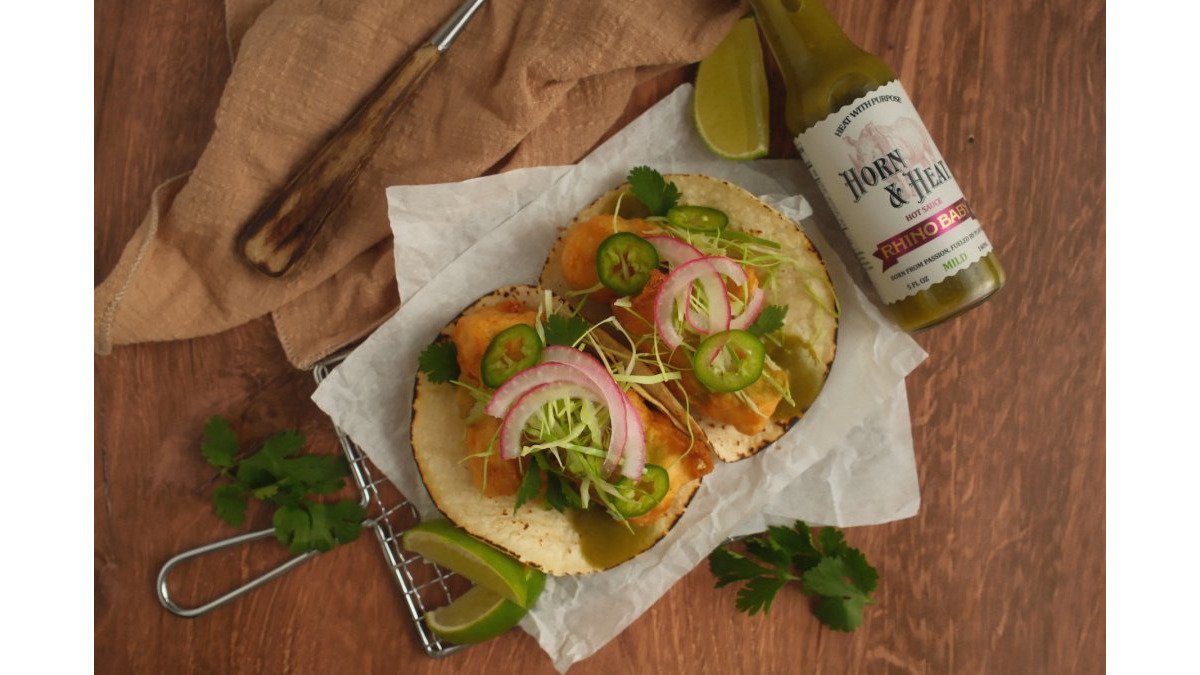
- Firm white fish: Brush on during the last few minutes of cooking. Delicate fish absorbs sauce quickly and can be overwhelmed by long marinating.
- Roasted vegetables: Toss with oil and sauce before roasting for even browning, then finish with hot honey.
- Pizza and flatbreads: Drizzle after baking. Heat applied to a finished crust dulls the sauce's top notes.
Braises, Soups, and Stews: Where a Spoonful Goes Furthest
Existing Horn & Heat recipes show how each bottle behaves across these applications, a faster way to learn a sauce's range than guessing at quantities.
How Heat Levels and Flavor Profiles Shape the Dish
Heat level and flavor profile are separate decisions, and confusing them is the most common mistake home cooks make. A sauce can be intensely hot with little flavor, or mild with remarkable depth. Treat heat as a dial and flavor as the destination.
Reading Heat Levels Without Losing Flavor
Heat is measured in Scoville heat units, a scale that quantifies capsaicin concentration, running from bell peppers near zero up through jalapeño and serrano and on to habanero and beyond. What the number cannot tell you is how the sauce tastes, which is why tasting notes matter more than a rating when choosing for cooking.
Layering Heat Through the Cooking Process
Layering is the technique most home cooks skip, and it separates a dish with integrated warmth from one that tastes like sauce was poured on top.
- Base layer: A small amount added early, into the aromatics or the liquid of a braise, simmer, or pot of chili. It disappears into the background and reads as part of the dish.
- Mid layer: A second addition partway through, once the main ingredients are in and the sauce can coat them. This is where the flavor profile, not just the heat, starts to register.
- Finishing layer: A final drizzle or spoonful off the heat. This preserves the volatile aromatics that cooking drives off, so the sauce tastes bright and complete rather than cooked-out.
Fruity, Vinegary, Smoky, Savory: Which Profile Fits Which Food
- Fruity: Pairs with pork, poultry, and lighter dishes where sweetness and acidity lift the food. Piri Piri and habanero-based sauces lean this direction.
- Vinegary: Cuts through fried food, barbecue, and rich braises. Classic with greens, beans, and anything heavy.
- Smoky: Suits grilled and roasted meats, chili, and dishes with charred notes.
- Savory and umami-forward: Works with mushrooms, aged cheeses, and slow-cooked dishes where depth is the goal.
Fermentation plays a role too. Fermented pepper mash develops complexity fresh-blended sauces lack, giving the sauce an umami quality that makes it useful as a flavor enhancement, not just a heat source.
Matching Heat and Profile to How You Actually Eat
Dietary needs change which bottle earns counter space, and they change the pairing rather than the technique:
- Comparing sodium: Check the current Nutrition Facts and compare equivalent portions. A vinegar-forward flavor or a thinner texture does not establish lower sodium.
- Comparing sugars and carbohydrates: Check each product's current label and the portion used. Rhino Gold contains brown sugar, Rhino Doctor Reserve contains sugar, and Rhino Nectar contains honey. A pepper-and-vinegar base does not establish low-sugar or keto suitability.
- Gluten-free cooking: Confirm the specific product's current labeling and manufacturer information. Do not infer gluten-free status from a simple ingredient list.
- Vegetarian and vegan cooking: Check the full ingredient list and any relevant manufacturer confirmation for the sauce you choose. Honey-based products such as Rhino Nectar are not suitable for a vegan dish.
Troubleshooting Heat Balance and Dietary Pairings
For cooks who want to explore the range without committing to a single bottle, the Horn & Heat Starter Hot Sauce and Hot Honey Pack brings all three sauces and the Piri Piri hot honey together.
Frequently Asked Questions
Which hot sauce is the most versatile for everyday cooking?
A medium-heat sauce with a balanced flavor profile tends to work across the widest range of dishes. Rhino Gold Hot Sauce is built for exactly that role: moderate heat, deep flavor, and a profile that complements tacos, grilled meals, and pasta sauce without overwhelming the plate. Pair it with a mild bottle for brighter dishes and a hot bottle for bolder ones, and you cover most of what a home kitchen needs.
How do I balance heat and flavor when cooking with hot sauce?
Add the sauce in stages rather than all at once. Start with a small amount early in cooking so the flavor melds into the dish, taste, then add more near the end if you want a sharper finish. Acidic, vinegar-based sauces sharpen as they reduce, while sweeter options like Rhino Nectar Piri Piri Hot Honey mellow and thicken. If a dish turns out hotter than you wanted, add fat, dairy, or a starch like rice or bread to soften it.
What makes a hot sauce good for marinades rather than just finishing?
Marinade-friendly sauces have enough acidity and salt to carry flavor into the meat, plus a flavor profile that holds up over time in the refrigerator. Vinegar-based sauces and pepper mash blends work well because their acidity helps season the surface while the pepper flavor deepens. A sauce that tastes thin or one-note straight from the bottle often disappears once it hits the grill, so look for layered flavor instead of pure heat.
Can I use hot honey in savory cooking, or is it only for drizzling?
Hot honey works in both roles. Rhino Nectar Piri Piri Hot Honey is made with wildflower honey and African Bird's Eye Pepper, so it starts sweet and finishes with a slow-building heat. That makes it useful as a glaze on roasted vegetables and grilled foods, as a balance for salty or fried dishes, and as a finishing drizzle over pizza, biscuits, or charcuterie. Use it where you want sweetness and heat at the same time.
I am not a spicy food person. Can versatile hot sauces still work for me?
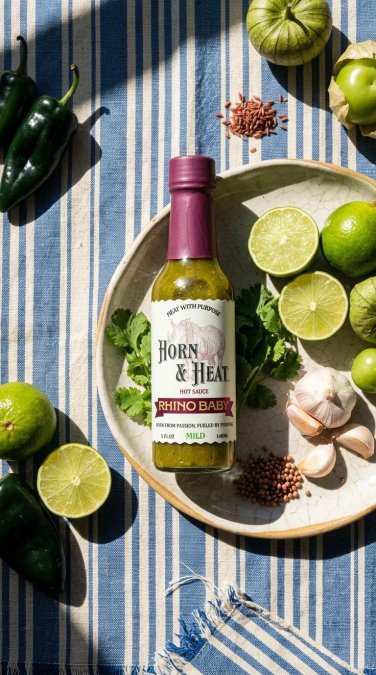
Yes. Mild bottles like Rhino Baby are designed for everyday use with gentle heat and layered flavor, so they season a dish without taking it over. Start with a quarter teaspoon in a single portion, taste, and adjust from there. Building heat tolerance is gradual, and a mild sauce used consistently in cooking often does more for a dish than a hot sauce used sparingly at the table.