

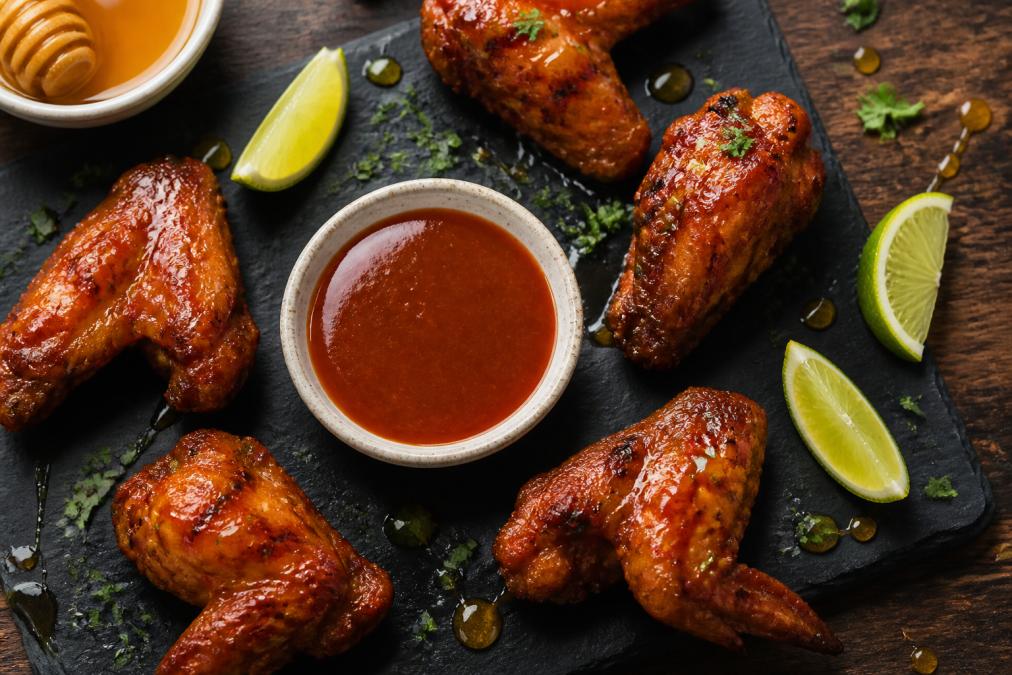
Best Hot Honey for Chicken Wings and Skewers
Table of Contents
- What Makes Quality Hot Honey for Chicken Wings
- Hot Honey Chicken Wings: Cooking Methods and Timing
- Hot Honey Chicken Skewers: Preparation and Grilling
- Creating a Hot Honey Glaze for Chicken
- Rhino Nectar Piri Piri Hot Honey: A Versatile Choice
- Choosing the Right Heat Level for Your Palate
- Frequently Asked Questions
Last Updated: October 19, 2026
What Makes Quality Hot Honey for Chicken Wings
The best hot honey for chicken wings and skewers combines balanced sweetness with controlled heat, enhancing rather than overpowering the chicken. Inferior hot honey tastes one-dimensional, pure sugar with a burn, while well-crafted versions layer floral honey notes, spice complexity, and vinegar brightness.
A few elements separate premium hot honey from grocery store versions. So does the heat source: single-pepper varieties like African Bird's Eye Pepper (Piri Piri) build heat gradually rather than hitting hard up front, which works better for glazes where you want heat to linger without scorching.

When selecting hot honey for chicken wings, consider how you'll use it: tossed into cooked wings, brushed on as a baking glaze, or served as a finishing drizzle.
Hot Honey Chicken Wings: Cooking Methods and Timing
Most wing recipes treat hot honey as an afterthought, a drizzle at the end. But the cooking method changes how a bottled hot honey behaves, and matching method to sauce is where home cooks get the biggest return. Here is how the main approaches compare when hot honey is the point, not a garnish.
Baked wings: the controlled approach
Baking gives you the most control over when the glaze goes on, which matters because honey sugars scorch faster than most people expect. A dry oven environment crisps the skin while a late glaze caramelizes into a sticky coating without charring.
Start with wings at room temperature, pat them dry, and season with salt before baking.
Glaze timing separates a clean glaze from a burnt one. Apply hot honey too early and the sugars scorch before the skin crisps; too late and it never sets.

Grilled wings: faster caramelization, less margin for error
Grilling shifts the calculus because direct heat caramelizes a honey glaze much faster than an oven. Grill over medium heat rather than high to avoid flare-ups from dripping fat, and brush hot honey on only during the final minutes, watching closely. The window between caramelized and burnt is narrow, so a thinner glaze applied twice beats one heavy coat.
Fried wings: sauce after, never during
Fried wings are the easiest case for hot honey because the sauce never meets the heat source. Fry until crisp, drain briefly, then toss in warmed hot honey in a bowl; the wing's residual heat loosens a thick honey so it coats evenly. This is where a honey-forward hot honey shines, since the sweetness plays against crisp skin.
Air fryer wings: the middle path
An air fryer behaves like a small, intense oven. Cook wings at 400°F until nearly done, then brush with hot honey and return them for the last 2-3 minutes. The concentrated heat caramelizes quickly, so stay close, and line the basket since drips concentrate.
The application rule that applies to all four methods
Whichever method you use, the chicken's surface should be mostly cooked but still slightly moist when the glaze goes on. A bone-dry surface repels the liquid; a wet one makes the glaze slide off. Let glazed wings rest a minute or two before serving so the coating firms up and adheres.
For a starting point, Horn & Heat's Rhino Nectar Piri Piri Hot Honey is built on wildflower honey and African Bird's Eye Pepper.
Hot Honey Chicken Skewers: Preparation and Grilling
Skewers present a different challenge than whole wings because the chicken pieces are smaller and cook faster. Cut thighs or breasts into 1.5-inch cubes, which cook through without drying out.
Soak wooden skewers in water for at least 30 minutes before threading chicken to prevent charring and keep the wood from burning through (Rainbow Kebabs).
Thread chicken loosely on skewers, leaving small gaps. Crowding prevents even cooking and creates steam pockets instead of browning.
Season the skewers with salt before grilling. During the final 2-3 minutes, brush generously with hot honey, rotating to coat all sides; the brief time prevents burning while allowing slight caramelization.
Hot honey works particularly well on skewers because the glaze drips slightly as you turn them, creating a sticky, flavorful exterior that contrasts with the tender interior.
Creating a Hot Honey Glaze for Chicken
A hot honey glaze is simply hot honey warmed and sometimes thinned to a brush-friendly consistency. Gently warm it in a saucepan over low heat, stirring occasionally. Never boil it; heat breaks down honey's delicate floral notes and can make the glaze bitter.
If your hot honey is too thick to brush, thin it with a splash of water or vinegar. A tablespoon of vinegar also adds brightness that cuts through the richness of chicken skin. Whisk gently until smooth before applying.
Balancing Sweet and Spicy Flavors
The best hot honey for chicken wings balances sweetness and heat. That balance is personal: some prefer honey-forward versions where heat arrives last, while others want spice from the first taste. Knowing your preference guides which jar to choose.
Sweet-first hot honey lets the honey dominate, with heat as a pleasant finish; it pairs well with crispy fried chicken because the sweetness complements the richness of the skin. Spice-first versions put heat up front, which some find exciting and others aggressive.
Application influences perceived balance. A light glaze emphasizes the chicken's natural flavor with heat and sweetness as supporting notes; a heavy glaze makes the hot honey dominant, so the sauce's internal balance matters more. Consider how thickly you'll apply it when choosing.
Timing Your Glaze Application
Applying hot honey at the right moment makes the difference between a glaze that sticks and one that slides off or burns. The chicken's surface should be mostly cooked but still slightly moist; a dry surface repels the liquid and a too-wet one makes the glaze slide off.
For baked wings, glaze during the final 5-10 minutes. For grilled chicken, the final 2-3 minutes works best because direct heat caramelizes quickly. For pan-seared chicken, toss finished pieces in warm hot honey off the heat for full control over coating thickness without burning.
Let the glaze set a minute or two before serving or moving the chicken so the sauce firms up and adheres rather than sliding off when plated.
Rhino Nectar Piri Piri Hot Honey: A Versatile Choice
Rhino Nectar Piri Piri Hot Honey, from Horn & Heat, is a thoughtfully crafted hot honey that works across chicken wings and skewers.
The Piri Piri pepper choice matters: these peppers build heat gradually rather than hitting hard immediately, making Rhino Nectar suited to glaze applications where complexity matters more than shock value.
Rhino Nectar works equally well as a glaze during cooking or a finishing drizzle after plating.
For those exploring hot honey options, the Horn & Heat Starter Pack includes Rhino Nectar alongside the brand's full range of hot sauces, letting cooks see how different heat levels and flavor profiles work across their cooking.

Choosing the Right Heat Level for Your Palate
Heat is the hardest thing to judge from a label, and most buyers get it wrong the first time because heat perception depends on context. A useful way to choose is to separate the three things that drive how hot a given hot honey tastes on a wing or skewer.
1. Where the heat arrives
Hot honey falls into two broad styles. Front-loaded versions hit immediately and fade, reading as aggressive on a light dish but getting lost under a heavy glaze. Slow-building versions, like those built on African Bird's Eye Pepper, arrive later and linger, which works better on wings and skewers because the heat stays with you through the bite. If a hot honey felt like a punch, a slow-building style is usually the fix, not a milder front-loaded one.
2. How much glaze you apply
Perceived heat scales with coating thickness more than most people expect: a light brush of a hotter hot honey can taste milder than a heavy coat of a medium one. Buying the hottest jar and applying it sparingly rarely works, since you lose the honey character before you lose the burn. Match the jar to the application; a finishing drizzle tolerates more heat than a glaze that bakes into the skin.
3. What you serve alongside
The same hot honey reads differently depending on the plate. Wings with a cool, creamy dip, slaw, or starchy side feel milder than wings eaten alone; skewers with rice or flatbread mute heat, while skewers straight off the grill amplify it. For a table with mixed tolerance, glaze lightly and put the jar on the side.
A practical way to calibrate
Before committing a whole batch, taste a small amount on a plain piece of cooked chicken, not on your finger. Fat and protein change how heat reads, and a finger taste overstates intensity. If it feels manageable on plain chicken, it will feel right on a glazed wing; if aggressive, cut the glaze back rather than switching jars.
If you are unsure where to start, a slow-building option such as Horn & Heat's Rhino Nectar Piri Piri Hot Honey is a forgiving first jar because the heat arrives gradually, giving your palate time to adjust. Cooks who want to explore different heat levels and flavor profiles can look at the Horn & Heat Starter Pack, which pairs Rhino Nectar with the brand's hot sauce lineup for side-by-side comparison.

Frequently Asked Questions
Is hot honey good on chicken wings?
Yes. Hot honey works exceptionally well on chicken wings because it combines sweet and spicy flavors that complement the richness of the meat. The honey caramelizes slightly during cooking, creating a sticky glaze that adheres to crispy skin. The slow-building heat balances the sweetness, preventing the sauce from becoming cloying. Rhino Nectar Piri Piri Hot Honey, made with wildflower honey and African Bird's Eye Pepper, is specifically designed for this kind of application, delivering deep floral sweetness followed by lingering heat.
Can you use hot honey on chicken skewers?
Absolutely. Hot honey works well on skewered chicken because the honey caramelizes on the outside while the meat stays tender inside. Brush hot honey onto skewers during the final minutes of cooking or after grilling to avoid burning the sugars. For best results, season the chicken first, then apply the hot honey glaze near the end of cooking. This prevents the glaze from charring while still creating a flavorful, sticky coating.
What should you look for in a hot honey for chicken wings?
Look for hot honey made with real honey (not corn syrup), quality spices, and balanced heat that doesn't overpower the sweetness. The best options have depth of flavor rather than pure burn. Check the ingredient list for recognizable spices like cayenne or paprika. Rhino Nectar Piri Piri Hot Honey uses wildflower honey and African Bird's Eye Pepper, offering a layered profile with floral notes and slow-building heat that enhances chicken without masking its flavor.
When should you add hot honey to chicken wings?
Apply hot honey during the final 5-10 minutes of cooking to prevent the sugars from burning while still allowing the glaze to caramelize. If baking, brush the wings with hot honey near the end of the baking time. For grilled wings, add it in the last few minutes over medium-high heat. You can also toss finished wings in hot honey immediately after cooking for a fresh, glossy finish. Timing depends on your cooking method, but the goal is a sticky, caramelized coating without charring.
Can hot honey be used as a glaze for chicken?
Yes, hot honey makes an excellent glaze for chicken in multiple forms. You can brush it directly onto wings or skewers during cooking, whisk it with a little vinegar or pan drippings to create a thinner glaze, or toss cooked chicken in hot honey for a quick coating. The honey caramelizes slightly, creating a sticky, flavorful layer. Rhino Nectar works particularly well because its piri piri heat complements roasted or grilled chicken without overpowering the meat's natural flavor.


