
How to Make Homemade Gourmet Glaze From Hot Sauce
Table of Contents
- Why a Hot Sauce Glaze Beats a Plain Drizzle
- How to Thicken Hot Sauce for Glaze
- Balancing Acidity in Cooking: Fixing a Sharp Glaze
- Using Hot Honey in Glazes for Sweet Heat
- How Heat Changes Acidity While the Glaze Cooks
- Troubleshooting Glazes for Specific Dishes
- Common Mistakes That Ruin a Hot Sauce Glaze
- Frequently Asked Questions
Last Updated: September 12, 2026
Why a Hot Sauce Glaze Beats a Plain Drizzle
A hot sauce glaze is a reduced, thickened sauce that clings to food instead of running off it, delivering concentrated flavor in every bite, and learning how to make homemade gourmet glaze from hot sauce starts with that same idea. Learning how to make homemade gourmet glaze from hot sauce starts with one principle: reduction concentrates flavor while thickening body, so the sauce coats rather than pools.
A plain drizzle slides off the surface; a glaze bonds to the food through heat, sugar, and evaporation. This guide from Horn & Heat covers thickening methods, acidity correction, sweet-heat layering, and fixes for glazes that turn out too sharp, too thin, or too flat.

How to Thicken Hot Sauce for Glaze
The most reliable way to thicken hot sauce for a glaze is gentle reduction: simmer the sauce over medium-low heat until it coats the back of a spoon. Sugar, honey, or a starch slurry can speed up the process, but reduction builds the deepest flavor.
Use a wide pan rather than a deep saucepan: surface area drives evaporation, cutting reduction time roughly in half. Keep the heat moderate, since a hard boil can scorch the sugars before the sauce thickens.
Three thickening routes work well:
- Reduction: Simmer until volume drops and the glaze coats a spoon. Best flavor, slowest method.
- Sweeteners: Honey, brown sugar, or maple syrup add body and viscosity while balancing heat.
- Starch slurry: A small amount of cornstarch mixed with cold water thickens quickly, but it can mute flavor if overused.
Balancing Acidity in Cooking: Fixing a Sharp Glaze
Balancing acidity in cooking means matching sourness against sweetness, salt, and fat so no single note dominates. The useful version goes one level deeper: knowing roughly where a glaze sits on the pH scale, and which lever moves the needle fastest without flattening the sauce.
A Working pH Frame for Glazes
Pure vinegar sits near pH 2.5 to 3, and most bottled hot sauces land between pH 3 and pH 4, since acid keeps them shelf-stable. A finished glaze usually falls between pH 3.5 and pH 4.5 once sugar, fat, and stock are folded in. You do not need a meter to cook well, but the numbers explain the behavior: the lower the pH, the more aggressively the tongue reads sour.
A glaze reading below roughly pH 3.5 tastes sharp no matter how much honey goes in, because the acid is still the loudest note. Raising it toward pH 4 by dilution, fat, or a starch-thickened stock is often more effective than piling on sugar.
The Four Levers, Ranked by Speed
Lever |
What It Does |
How Fast It Reads |
Watch Out For |
|---|---|---|---|
Fat (butter, cream, oil) |
Coats the palate and slows acid contact |
Immediate |
Can mute heat and dilute color |
Sweetener (honey, sugar, syrup) |
Rounds sour edges, adds body |
Immediate |
Overshooting is hard to reverse |
Salt |
Suppresses bitterness, reframes acid as brightness |
Immediate |
Too much reads as harsh, not balanced |
Dilution (stock, water, cream) |
Lowers overall acid concentration |
Fast, but thins texture |
Requires re-reducing, which re-concentrates acid |
Fat and salt are the most underused fixes. Cooks reach for sugar first, then overshoot; a knob of butter and a pinch of salt often does more for a sharp glaze than another spoon of honey.
Signs Your Glaze Is Too Acidic
A glaze that is too acidic makes the tongue tighten or pucker, leaves a sharp burn at the back of the throat rather than a warm one, and tastes thin even when the texture is thick. If a second spoonful feels less pleasant than the first, acidity is usually the culprit.
Order of Operations
Fix flavor before texture, and acid before sweet. The sequence that works:
- Taste the base sauce on its own to establish its baseline sharpness.
- Reduce to roughly the target consistency, then taste again, since reduction concentrates acid.
- Add fat and salt first, in small increments, tasting after each.
- Add sweetener only after fat and salt have done their work.
- Adjust acid last, with a splash of vinegar or citrus, if the glaze now reads flat.
Adding acid at the end rather than the start is the biggest correction most cooks can make: acid added early reduces and intensifies, while acid added late stays controllable.
Natural vs. Processed Balancing Agents
Honey, butter, cream, and stock are the natural levers, bringing their own flavor along with their balancing effect. Cornstarch, xanthan gum, and commercial stabilizers adjust texture without changing flavor. For a glaze, natural agents usually do double duty, making them the better first move; save processed thickeners for the final texture adjustment once flavor is where you want it.
Using Hot Honey in Glazes for Sweet Heat
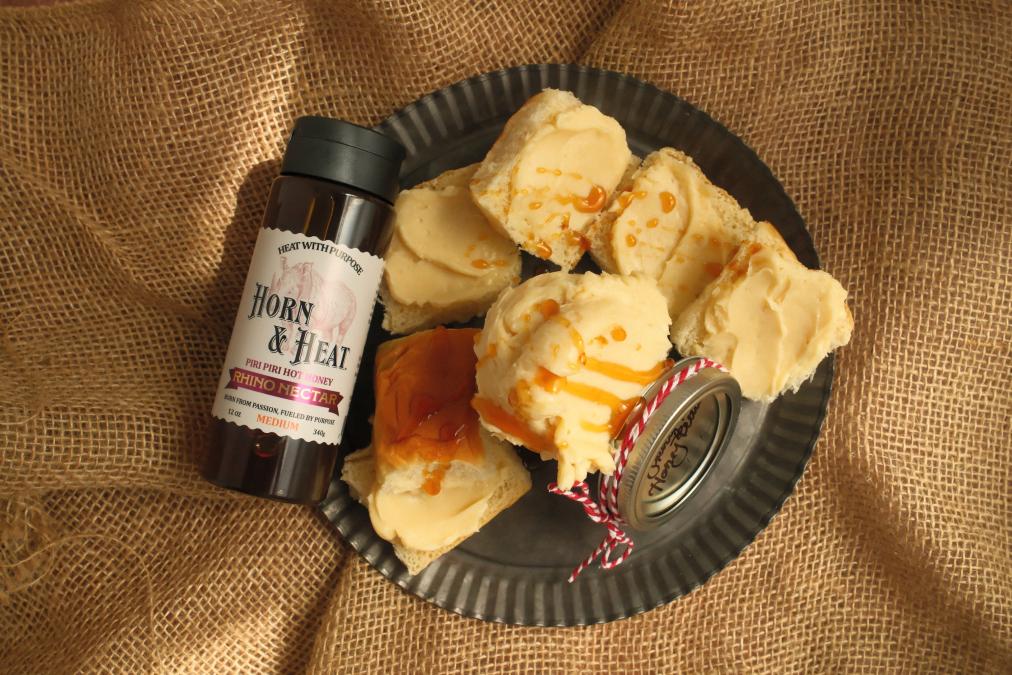
Hot honey is the fastest route to a balanced sweet-heat glaze because it delivers sweetness and slow-building warmth in a single ingredient. Rhino Nectar Piri Piri Hot Honey, made with wildflower honey and African Bird's Eye Pepper, starts floral and finishes with heat that lingers, which makes it a natural base for glazes on pizza, fried chicken, roasted vegetables, and grilled proteins.
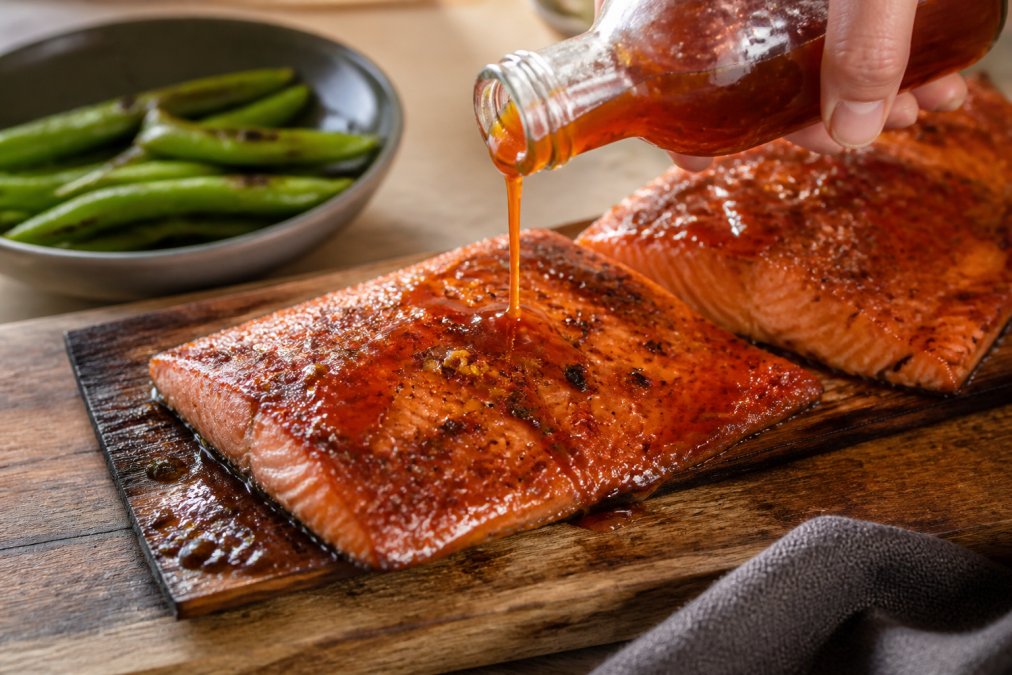
The practical advantage is control. Because the honey already carries heat, a cook can build a glaze with one bottle instead of balancing three. Warm the honey slightly so it loosens, whisk it with a splash of vinegar or citrus for contrast, and brush it on during the final minutes of cooking so the sugars caramelize without burning.
For cooks who want a full range of heat, the Horn & Heat Hot Sauce Trio pairs three sauces from mild to hot, and the Sweet Heat Bundle combines Rhino Nectar with a choice of sauce for anyone building a glaze repertoire.

How Heat Changes Acidity While the Glaze Cooks
Heat changes how acidity reads in a glaze, and understanding that is what separates a glaze that tastes balanced on the plate from one that only tasted balanced in the pan. Heat is what moves acid around while you cook.
Direction One: Concentration
As a glaze reduces, water evaporates and everything dissolved in it concentrates, acid included. A glaze reduced by half roughly doubles its acid concentration, which is why a sauce that tasted bright at the start of a simmer can taste biting ten minutes later (fdc.nal.usda.gov). This is the mechanism behind the most common glaze failure: the cook tastes early, declares it balanced, and walks away while the acid quietly intensifies.
Direction Two: Volatilization and Caramelization
Some acids are volatile and evaporate with the water; vinegar's acetic acid is the clearest example. A long simmer drives off a portion of it, softening the sharp top note even as the remaining acid concentrates. Meanwhile, sugars caramelize and produce new sweet and bitter compounds that change how the tongue reads the acid. The net effect: a reduced glaze tastes rounder and deeper than the same sauce straight from the bottle, even though its measured acidity may be higher.
Direction Three: High Heat and Perception
High-heat cooking does not change the acid itself, but it changes how you perceive it. Searing and grilling create browning compounds that read as savory and slightly bitter, and bitterness competes with sourness on the palate, so a glaze on a well-seared piece of meat tastes less sharp than the same glaze on a poached one. Match glaze intensity to cooking method: a hard-seared protein can carry a sharper glaze than a gently cooked one, because the crust does part of the balancing work.
Three Tasting Checkpoints
The window between bright and biting is narrow and moves as the glaze cooks. Taste at three points:
- At the start, to establish the base sauce's baseline.
- Halfway through reduction, to catch concentration before it overshoots.
- Just before serving, off the heat, to make the final adjustment.
Adjust at the last tasting, not the first: a glaze that tastes slightly under-seasoned at checkpoint two is usually right at checkpoint three, because carryover heat and cooling shift perception.
Why This Matters for Application Timing
A glaze brushed on at the start spends the whole cook time reducing and concentrating on the food's surface, while one brushed on in the final minutes only needs to taste right when it hits the plate. That is why the same recipe can fail or succeed depending on timing. For grilled and roasted dishes, apply late and let residual heat set the glaze without driving off the balance you built.
USDA FoodData Central documents how cooking alters the composition of foods, which is the underlying reason a simmered glaze tastes different from a raw one.
Troubleshooting Glazes for Specific Dishes
Different dishes fail in different ways, and matching the fix to the food saves a batch. A glaze built for wings rarely suits fish, and roasted vegetables need different balance than grilled meat.
- Wings and fried chicken: Glaze too thin? Reduce further or add honey. Too sharp? Add butter and a pinch of salt.
- Grilled meats: Glaze burning before the meat cooks? Brush it on in the last few minutes only, or thin it with stock.
- Pizza and flatbread: Glaze pooling? Reduce to a syrupy consistency and drizzle after baking rather than before.
- Roasted vegetables: Glaze tasting flat? Add acid at the end, not the start, and finish with a pinch of salt.
- Fish and seafood: Glaze overwhelming? Cut it with citrus and serve on the side for dipping.
The pattern across all five is the same: adjust for the cooking method, not just the flavor.
Common Mistakes That Ruin a Hot Sauce Glaze
The most common mistake is adding thickener before the flavor is right. Starch and reduction both concentrate whatever is already in the pan, so a glaze that tastes off before thickening will taste worse after. Fix flavor first, then texture.
Other frequent errors:
- Boiling hard instead of simmering. High heat scorches sugars and turns a glaze bitter.
- Adding acid at the start. Acid reduces and intensifies; add it near the end for control.
- Skipping the taste test. A glaze is a moving target as it cooks, and one taste at the start tells you nothing about the finish.
- Over-thickening. A glaze that sets like syrup on the plate reads as heavy rather than glossy.
A common mistake is treating a glaze as a single-step pour. It is a sequence: build flavor, reduce, correct acid, then thicken. Cooks who reverse that order usually end up starting over.
For anyone building a glaze pantry, the Horn & Heat Starter Hot Sauce and Hot Honey Pack covers the full range from mild to hot alongside Rhino Nectar, which gives a cook every heat level needed to match a glaze to a dish. FDA guidance on safe food handling is worth reviewing for anyone storing homemade glazes, since a glaze made with fresh ingredients behaves differently than a bottled sauce.

Building a glaze that tastes balanced rather than simply hot takes practice, and the right base sauce removes half the guesswork. Horn & Heat crafts chef-crafted sauces and Rhino Nectar Piri Piri Hot Honey designed to be used as cooking ingredients, not just condiments, with balanced flavor across mild, medium, and hot. Every bottle supports rhino conservation through the Rockwood Conservation Fund. Get started with Horn & Heat and build glazes with flavor that holds up from the pan to the plate.
Frequently Asked Questions
What ingredients work best for thickening a hot sauce glaze?
Honey, brown sugar, and fruit preserves add body and cling while rounding out sharpness. A cornstarch or arrowroot slurry simmered for a minute or two thickens without dulling flavor. Reducing the sauce uncovered over medium-low heat also concentrates it naturally. The goal is a glaze that coats the back of a spoon but still pours, so add thickeners in small amounts and stop before it turns pasty.
How do you balance the acidity of hot sauce when making a reduction?
Taste as the glaze reduces, since concentrating a sauce intensifies both heat and sourness. A pinch of salt, a spoonful of honey, or a small knob of butter can soften sharp edges and add roundness. If the glaze still tastes aggressive, a splash of stock or a teaspoon of dairy will mellow it. Balance in small increments rather than dumping in a large amount at once.
Can you use hot honey to create a gourmet glaze?
Yes. Hot honey brings floral sweetness and slow-building heat that works well in glazes for chicken, pork, roasted vegetables, and pizza. Rhino Nectar Piri Piri Hot Honey, made with wildflower honey and African Bird's Eye Pepper, layers sweetness with a warm finish. Whisk it with a splash of vinegar or citrus and a pinch of salt, then brush it on near the end of cooking so the sugars do not scorch.
How do you prevent a hot sauce glaze from burning during cooking?
Sugars in honey, preserves, and reduced sauces scorch quickly over high heat. Brush glazes on during the last few minutes of grilling, roasting, or pan-searing, and keep the heat at medium or lower. If the glaze starts darkening too fast, move the food to a cooler zone or tent it with foil. A glaze applied too early will char before the food is cooked through.