
How to Make Hot Honey Glaze for Salmon
Table of Contents
- What Makes a Hot Honey Glaze Work on Salmon
- How to Balance Heat and Sweetness in Glazes
- The Best Hot Honey for Salmon (and Why It Matters)
- Salmon Glaze Cooking Techniques: Skillet, Oven, and Broiler
- Glazing Before, During, or After Cooking
- Serving, Storing, and Reheating Glazed Salmon
- Frequently Asked Questions
Last Updated: September 10, 2026
What Makes a Hot Honey Glaze Work on Salmon
A hot honey glaze is a honey-based sauce balanced with acid, aromatics, and chili heat, brushed onto salmon so it caramelizes into a glossy coating rather than a sticky puddle. According to USDA FoodData Central nutrient database, salmon is naturally rich in fat, and that fat is the reason the pairing works: honey clings to the surface while the rendered oils carry the chili and citrus notes across the whole fillet.

At Horn & Heat, the approach to glazes starts with balance rather than brute heat. A glaze that only tastes sweet buries the fish, and one that only tastes hot does the same from the other direction.
The Three Jobs of a Good Glaze
Every successful salmon glaze does three jobs at once: it seasons the surface, caramelizes under heat, and finishes as a sauce the fillet can be served with rather than scraped off. Skip any one and the result reads as a topping instead of a glaze.
- Season: salt, soy sauce, or a low-sodium alternative penetrates the surface before cooking
- Caramelize: honey and sugar reduce and brown under direct heat, building flavor
- Finish: reserved glaze, warmed and thinned, becomes the sauce at the table
How to Balance Heat and Sweetness in Glazes
Balance in a hot honey glaze comes down to four levers: sweetness, acid, salt, and heat. Move one and the others need adjusting. Honey carries the sweetness, apple cider vinegar or citrus juice supplies the acid, soy sauce or salt provides the savory base, and chili flakes or prepared hot honey deliver the heat.
The Acid-to-Sugar Ratio Is Really a Chemistry Question
Most recipes tell you to "balance to taste" and stop there. The more useful way to think about a glaze is as a ratio between sugar and acid, because those two ingredients do different physical jobs in the pan.
Honey is roughly 80 percent sugars by weight, mostly fructose and glucose, and those sugars are what brown and eventually burn. Acid lowers the pH so sugars caramelize more slowly and evenly, cuts the cloying quality of straight honey, and helps the honey and any water-based ingredients emulsify into one pourable sauce instead of separating on the fillet. Too little acid tastes flat and goes sticky; too much tastes sharp and runs off the fish.
A practical starting framework is roughly two parts honey to one part acid by volume, with a small splash of soy sauce and chili added to taste. That is a framework, not a fixed formula. If your honey is dark and strongly flavored, lean toward more acid; if it is light and floral, stay closer to the low end.
Why Glazes Separate, and How to Stop It
Honey and vinegar resist combining at room temperature because one is a thick sugar syrup and the other is mostly water. A slow whisk over medium-low heat lets them emulsify into a single sauce. Dump cold vinegar into cold honey and stir for ten seconds, and you get a glaze that looks combined in the bowl but splits the moment it hits a hot pan.
The fix is order and heat. Warm the honey first, whisk the acid in a little at a time, and keep the pan at a gentle simmer. A rolling boil drives off water faster than the sugars can reincorporate, which is a common reason a glaze turns grainy or separates mid-cook.
Tasting as You Build
Taste the glaze cold, then again after a brief simmer. Reduction concentrates both sweetness and heat, so a glaze that tastes mild in the bowl can taste considerably sharper once cooked down. Simmering also lets chili flakes and aromatics, such as minced garlic, release into the honey rather than sit on top of it.
Swapping the Heat Source
Most recipes default to sriracha or red pepper flakes, but the heat source changes the character of the glaze more than the amount does. A few options:
- Gochujang brings fermented depth and a slower, rounder heat that plays well with the sweetness of honey.
- Harissa adds smoky, earthy notes and a warmth that suits roasted or broiled salmon.
- Chipotle in adobo contributes a smoky, slightly sweet heat that pairs naturally with the caramelized honey.
- Prepared hot honey is the simplest route, since the chili infusion is already balanced into the honey and you only need to adjust acid and salt.
Each of these shifts the acid and salt you need, so taste after you swap rather than assuming the same ratio will work.

The Best Hot Honey for Salmon (and Why It Matters)
The best hot honey for salmon is one built on real honey with a genuine chili infusion, because the glaze is only as good as its base. A thin, corn-syrup-based substitute reduces too fast and tastes flat. A honey with slow-building heat, like a Piri Piri infusion, gives the cook more control than a sharp, immediate burn.
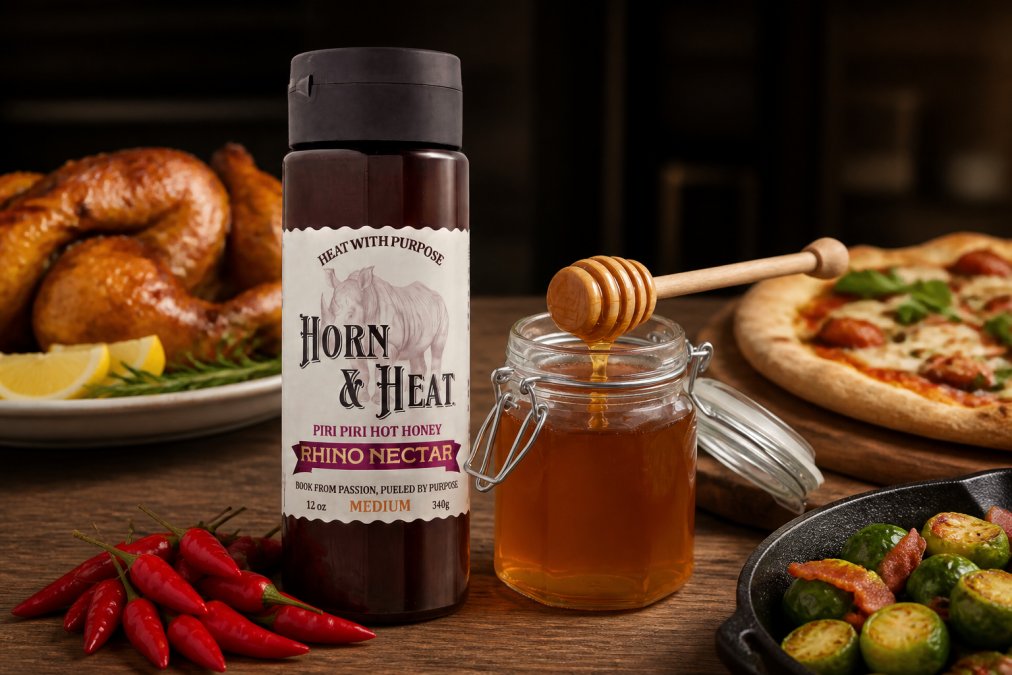
This is where product choice stops being a detail. Rhino Nectar Piri Piri Hot Honey from Horn & Heat is made with wildflower honey and African Bird's Eye Pepper, so the sweetness arrives first and the heat follows.

For cooks who want to compare heat levels across a single meal, the Horn & Heat Sweet Heat Bundle pairs Rhino Nectar with a choice of hot sauce, and the Horn & Heat Starter Hot Sauce and Hot Honey Pack covers the range from mild to bold.
Glaze Goal |
Honey Style |
Heat Source |
Best For |
|---|---|---|---|
Mild, floral |
Wildflower honey |
Small pinch chili flakes |
Delicate palates, kids |
Balanced |
Honey with acid |
Prepared hot honey |
Everyday weeknight cooking |
Bold |
Darker honey |
Extra chili, garlic |
Grilling, assertive sides |
Salmon Glaze Cooking Techniques: Skillet, Oven, and Broiler
Skillet-searing gives the most control over caramelization, the oven gives the most even results, and the broiler gives the fastest browning with the least margin for error. Most home cooks get the best outcome from a skillet-sear finished under the broiler, which combines control with speed.
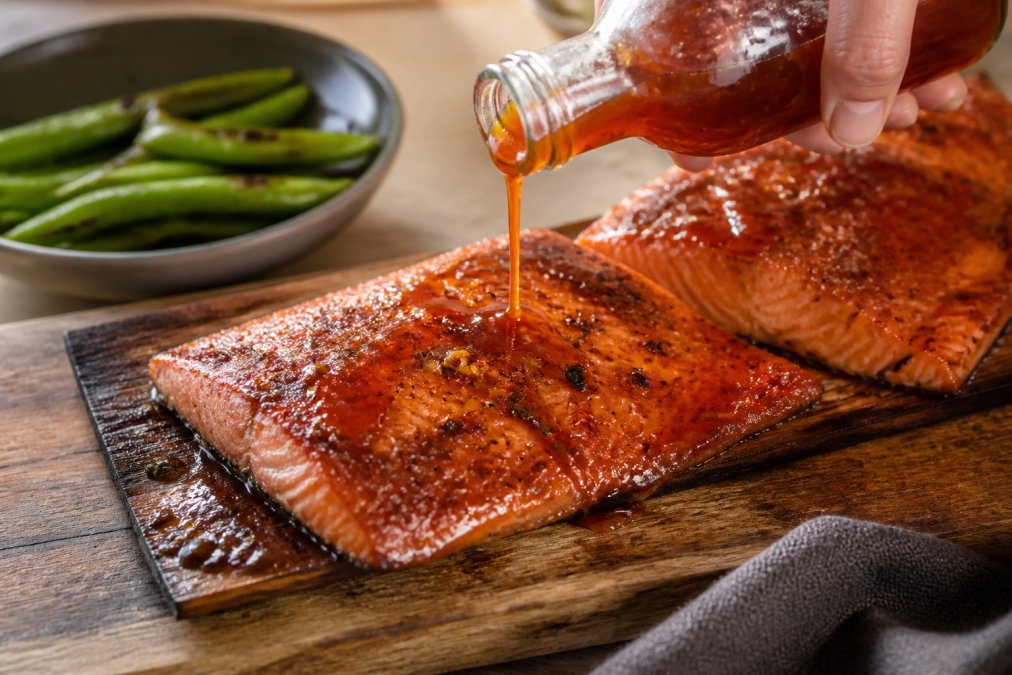
A skillet-seared fillet should go into a hot pan skin-side down and cook mostly undisturbed. The glaze goes on late, in the final minutes, because honey burns before the fish is done. Basting with a spoon coats the fillet without flooding the pan and keeps heat on the surface where caramelization happens.
Oven roasting at moderate heat suits thicker fillets and larger batches. Apply the glaze in two thin coats rather than one heavy one to prevent pooling and get a more even finish. Broiling works best as a final step of one to three minutes, watched constantly, since the distance between caramelized and burnt is short.
Getting the Skin Crisp Without Drying Out the Fillets
This is where glazed salmon is most often disappointing. The glaze wants a hot, fast surface to caramelize on, while the skin wants sustained contact with a hot pan to render and crisp. The technique that resolves them is to treat the skin and the glaze as two separate jobs.
Start with a dry surface. Pat the skin thoroughly with paper towels, then let the fillet sit uncovered in the refrigerator for fifteen to twenty minutes if you have time. Surface moisture steams the skin instead of searing it.
Use a heavy pan, preheat it properly, and add just enough oil to coat the bottom thinly. Lay the fillet skin-side down and press gently for the first ten to fifteen seconds so the skin makes full contact, then leave it alone. Moving the fillet prevents the skin from developing the continuous browned layer that reads as crisp.
Here is the key move: glaze the flesh side, not the skin side. Brush the glaze onto the top of the fillet during the final minutes, and if you finish under the broiler, keep the skin side down so the glaze caramelizes on top while the skin crisps against the pan. Flipping to glaze the skin side trades crisp skin for a sticky coating most people find less appealing.
For oven roasting, a wire rack over a sheet pan lets hot air circulate under the skin and produces a crisper result than a flat pan, though it takes a few minutes longer. For broiling, keep the fillet skin-side down and watch the glaze, not the skin.
How to Keep the Glaze From Burning
Honey burns at a lower temperature than most cooking fats, the biggest reason glazed salmon comes out bitter. The fix is timing and dilution: apply the glaze in the last third of cooking, thin it slightly with acid or water, and keep the heat moderate until the final browning step.
A common mistake is brushing glaze onto a cold fillet before it hits the pan; the honey scorches while the salmon is still raw in the center. Glaze late, glaze thin, and glaze more than once.
Matching the Method to the Fillet
Thin tail-end fillets cook through quickly and suit a fast skillet sear with the glaze applied in the last minute. Thick center-cut fillets benefit from a moderate oven roast with a brief broiler finish, since even ambient heat cooks the interior without overdoing the surface. Skin-on fillets reward the skillet most, because direct pan contact produces the crisp texture. Skinless fillets are more forgiving in the oven, where there is no skin to manage and the glaze can go on in two thin coats.
Glazing Before, During, or After Cooking
Glazing before cooking works best as a marinade, not a finish: a thin glaze applied thirty minutes ahead seasons the surface, but a thick one will burn. Glazing during cooking is standard for skillet and oven methods, and glazing after cooking is how the sauce gets onto the plate.
The practical sequence for most home kitchens looks like this:
- Pat the fillets dry and season lightly with salt
- Whisk the glaze and simmer it briefly to reduce
- Sear or roast the salmon most of the way through
- Brush on the glaze in thin coats during the final minutes
- Warm the reserved glaze and spoon it over the fillets to serve
Reserving part of the glaze before it touches raw fish is a food safety point as much as a flavor one. Per USDA food safety guidance on safe food handling, any sauce that has contacted raw fish should be brought to a full simmer before it is served again.
Serving, Storing, and Reheating Glazed Salmon
Glazed salmon is best served immediately, when the glaze is still glossy and the interior is flaky. Cooked salmon keeps in the refrigerator for a few days in a sealed container, but the glaze loses its shine and reabsorbs into the fish. That is a texture change, not a safety problem, and the flavor holds up well.
Reheating should be gentle. A low oven or a covered pan over low heat warms the fillet without driving off moisture; the microwave works in a pinch but toughens the edges. If the glaze has dried out, a spoonful of fresh glaze or a squeeze of citrus restores the finish.
For sides, glazed salmon pairs with roasted vegetables, rice, grains, or a simple green salad. The glaze is assertive enough that sides should stay fairly plain. Garnishes such as sliced scallions or sesame seeds add texture and freshness without competing with the honey.
A note on doneness: salmon is generally considered done when it reaches an internal temperature of 145°F at the thickest point, per FoodSafety.gov safe minimum cooking temperatures. Many cooks pull it earlier for a softer texture, which is a personal preference rather than a safety recommendation.
Getting a hot honey glaze right on salmon comes down to timing, balance, and using a honey worth building a sauce around. Horn & Heat makes Rhino Nectar Piri Piri Hot Honey with wildflower honey and African Bird's Eye Pepper, a combination built to layer sweetness and heat rather than flatten one into the other. The Rhino Nectar Piri Piri Hot Honey works as a glaze base, a finishing drizzle, and a table sauce, and every bottle supports rhino conservation through the Rockwood Conservation Fund. Browse the full range and find the heat level that fits the way you cook.
Frequently Asked Questions
How do you make a hot honey salmon glaze?
Start with a hot honey like Rhino Nectar Piri Piri Hot Honey, then warm it gently in a small saucepan with a splash of apple cider vinegar or citrus juice and a pinch of salt. Whisk until the mixture is smooth and slightly thickened, then taste and adjust. The vinegar or citrus keeps the glaze from tasting flat, while the honey carries the heat. Brush it on salmon toward the end of cooking so the sugars do not scorch.
Is it better to glaze salmon before or after baking?
Glaze in layers. A thin coat before baking lets flavor settle into the fish, but most of the glaze should go on in the last few minutes of cooking. Honey burns quickly above 350°F, so a heavy coat applied at the start will darken before the salmon is done. Finish with a fresh drizzle after the fillet comes out of the oven for the cleanest flavor and shine.
Can you use hot honey as a marinade for salmon?
Yes, but keep it short. Hot honey works as a quick marinade when thinned with soy sauce, citrus juice, or vinegar, since straight honey is too thick to penetrate. Twenty to thirty minutes in the refrigerator is enough for a salmon fillet; longer than that and the acids start to firm up the surface of the fish. Reserve some of the mixture before it touches raw salmon to use as a finishing drizzle.
How do you prevent honey glaze from burning on salmon?
Lower the heat and glaze late. Bake salmon at 375°F to 400°F and brush the glaze on during the final 5 to 8 minutes, or move the fillet under the broiler for 1 to 2 minutes at the very end. If the glaze starts to darken too fast, tent the fish loosely with foil. A glaze thinned with vinegar or citrus also resists burning better than straight honey because the added liquid slows caramelization.