
Top 5 Spicy Marinades for Summer Grilling in 2026
Table of Contents
- Why Spicy Marinades Win on the Grill
- How to Make a Spicy Marinade: The 3-Part Formula
- 1. Citrus-Chili Marinade for Chicken
- 2. Smoky Chipotle-Steak Marinade
- 3. Sweet and Spicy Piri Piri Glaze
- 4. Tangy Alabama-Style White BBQ Marinade
- 5. Umami-Rich Gochujang Marinade
- Best Hot Sauce for Grilling: Choosing Your Heat
- Frequently Asked Questions
Last Updated: September 9, 2026
A spicy marinade is a flavor-building mixture of oil, acid, and seasonings used to coat proteins before grilling. The best versions balance heat with acidity and aromatics so the chili enhances the meat rather than overpowering it. This guide breaks down five spicy marinade profiles for chicken, steak, and seafood.
Each marinade follows a simple three-part formula that home cooks can adapt to any heat preference. Below, we'll show you how to build them, how long to marinate different proteins, and which sauces work best as the heat source.
Why Spicy Marinades Win on the Grill
Spicy marinades do more than add heat. When built correctly, they tenderize proteins, build a flavorful crust during caramelization, and create the kind of char that defines great grilled food. The acid helps break down surface proteins while the oil carries fat-soluble flavor compounds into the meat.
A well-made spicy marinade also protects against dry chicken breast and tough steak. The sugar content promotes caramelization and char, while the oil helps the exterior crisp before the interior overcooks.
Heat level customization is where most home cooks get stuck. Instead of adding more chili when you want more spice, build heat gradually. Start with a mild sauce as the base, then add a hotter element only after tasting. You can always add heat, but you cannot remove it once the meat is coated.

How to Make a Spicy Marinade: The 3-Part Formula
A spicy marinade is built on three components that each serve a distinct purpose. Understanding this ratio makes it easy to adapt any recipe to what is in the fridge.
The Base: Oil, Acid, and Flavor
The standard marinade ratio is roughly three parts oil to one part acid, plus seasonings (foodsafety.gov). The oil carries fat-soluble flavors and prevents sticking. The acid tenderizes the surface and brightens the final flavor. Flavor comes from aromatics like garlic, onion, herbs, and the chili itself.
For spicy marinades, the heat source can be fresh chilies, dried chili flakes, or a prepared hot sauce. A quality hot sauce is often the easiest and most consistent option because the chilies are already fermented or cooked, which adds umami depth that raw chilies lack. This is where a chef-crafted sauce like Horn & Heat's Rhino Doctor Reserve shines, since it brings eight fermented chilies and balanced acidity to the marinade in one step.

| Marinade Component | Purpose | Typical Ratio | Example |
|---|---|---|---|
| Oil | Carries flavor, prevents sticking | 3 parts | Olive oil, neutral oil |
| Acid | Tenderizes, brightens flavor | 1 part | Citrus juice, vinegar, fermented chilies |
| Flavor | Adds depth and heat | To taste | Garlic, herbs, hot sauce, spices |
The Chemistry of Acid: Tenderize vs. Flavor Penetration
Most home cooks treat acid as a one-size-fits-all tenderizer, but the chemistry tells a more nuanced story. Acid does not penetrate deep into meat; it acts primarily on the surface, loosening the structure so moisture and seasonings cling better during cooking. Marinating a thick cut of steak for eight hours does not yield a fully seasoned interior, it only risks turning the outer layer mushy.
What acid does do effectively is brighten flavor. The sharpness of vinegar or citrus cuts through the richness of fatty cuts like chicken thighs or skirt steak. It also promotes browning, as a slightly acidic surface lowers the pH and accelerates the Maillard reaction responsible for the savory crust on grilled meat.
The takeaway: use acid for surface tenderization and flavor balance, not for deep penetration. For flavor that reaches the center of a thick cut, rely on a dry rub applied ahead of time or a finishing sauce after grilling.
Heat Level Customization: A Scale from Mild to Extreme
Generic recipes assume one heat level, but a great marinade is adjustable. Build heat in layers, not all at once. A practical approach is to use a scale of 1 to 5 for each marinade, where 1 is a gentle warmth and 5 is intense heat.
- Level 1 (Mild): Use a sauce like Rhino Baby Hot Sauce as the sole heat source. Its jalapeño and tomatillo base provides a fresh, green warmth that is approachable for all palates.
- Level 3 (Medium): Combine a mild sauce with a hotter element, such as a teaspoon of chipotle powder or a splash of a sauce like Rhino Gold Hot Sauce. This builds complexity without overwhelming.
- Level 5 (Extreme): Use a hot sauce like Rhino Doctor Reserve as the base and supplement with fresh minced habanero or a pinch of cayenne. This is for heat-seekers who want the chili to be the dominant note.
Control the baseline with a flavorful sauce and then adjust upward with a concentrated heat source. This method gives predictable results and prevents the common mistake of making a marinade so fiery that it masks the flavor of the meat.
1. Citrus-Chili Marinade for Chicken
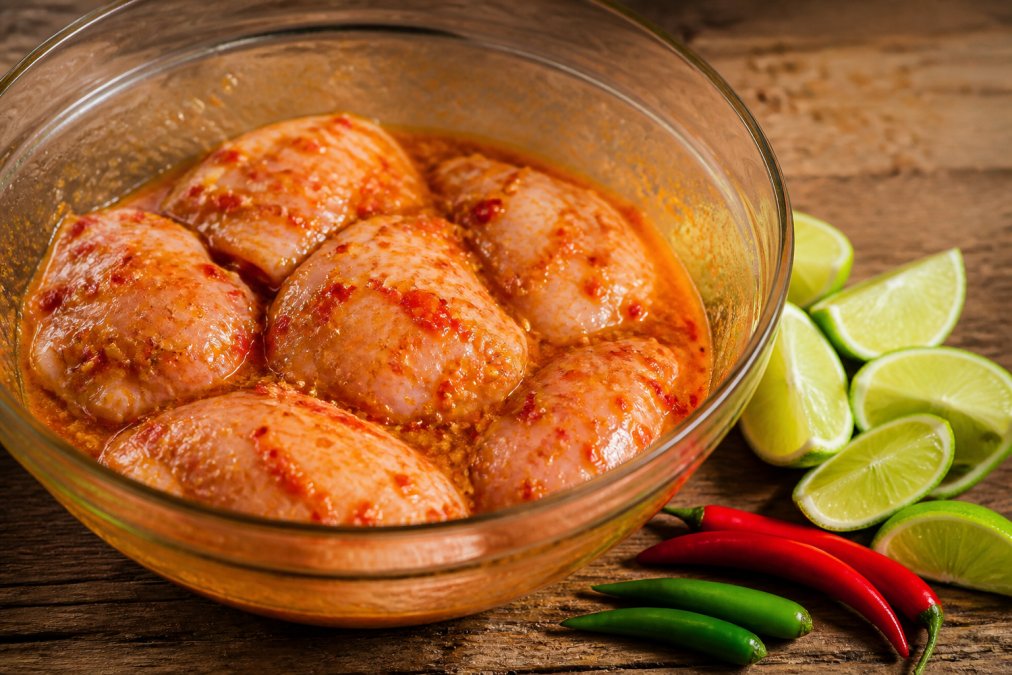
The citrus-chili marinade is a versatile spicy marinade for summer grilling, pairing bright acidity with slow-building heat that works on chicken thighs, breasts, and even shrimp. It can deliver juicy grilled chicken with a tangy, charred exterior, provided you respect the marinating time.
For this profile, combine fresh lime juice, orange zest, garlic, olive oil, and your choice of chili. A mild option like Rhino Baby Hot Sauce, with its blend of jalapeños, tomatillos, and poblanos, adds a fresh, green heat without overwhelming the citrus. The tomatillos in the sauce reinforce the acidity while the cilantro and cumin round out the flavor profile.
The ideal marinating time for chicken in a citrus-based marinade is two to four hours. Longer than six hours and the acid begins to break down the meat fibers, creating a mushy texture. Set a timer and pull the chicken at four hours maximum, then pat it dry before grilling to encourage proper char.
2. Smoky Chipotle-Steak Marinade
Chipotle peppers bring a distinctive smoky depth that stands up to the bold flavor of steak. This spicy marinade works best on flank steak, skirt steak, or sirloin. The key is balancing the chipotle's earthy heat with enough acid to cut through the richness of the beef.
A chipotle-steak marinade typically combines adobo sauce, lime juice, garlic, cumin, and oil. For a shortcut that does not sacrifice flavor, a medium-heat sauce like Rhino Gold Hot Sauce provides the chili depth and vinegar tang in one pour, leaving room to customize with extra smoked paprika or chipotle powder.
Steak needs less time in a spicy marinade than most people think. Thirty minutes to two hours is sufficient for thin cuts like skirt steak (beefitswhatsfordinner.com). Extended marinating can make the exterior mushy while the center stays untouched. For thicker cuts, score the surface lightly to help the marinade penetrate without soaking the meat overnight.
3. Sweet and Spicy Piri Piri Glaze
Piri piri, also known as African Bird's Eye Pepper, delivers a bright, slow-building heat that pairs naturally with sweet elements. This spicy marinade profile works across chicken, shrimp, and even grilled vegetables. The sweet and spicy contrast also creates the caramelization that grillers chase.
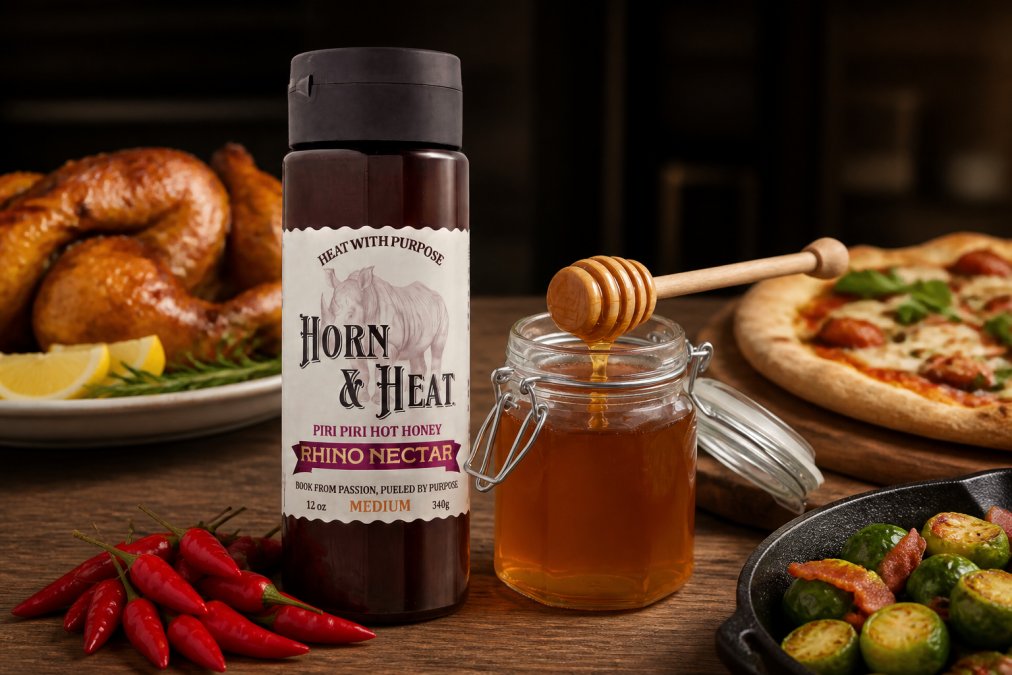
The piri piri approach relies on a hot honey or piri piri sauce as the backbone. Rhino Nectar Piri Piri Hot Honey combines wildflower honey with African Bird's Eye Pepper, offering deep floral sweetness that finishes with lingering heat. It is not merely sugar with spice added, the honey carries the chili heat differently than an oil-based sauce, coating the surface and building layers of caramelization.
Because hot honey contains sugar, this marinade requires careful heat management. Brush it on during the last few minutes of grilling rather than marinating for hours, which lets the honey caramelize without burning. This produces glossy, charred edges with a sticky-sweet finish.
4. Tangy Alabama-Style White BBQ Marinade
Alabama-style white BBQ sauce breaks the mold of red, tomato-based barbecue sauces. This tangy, mayonnaise-based marinade delivers a creamy, vinegar-forward profile with a peppery kick that works exceptionally well on chicken and pork.
The base combines mayonnaise, apple cider vinegar, horseradish, and black pepper. For heat, a mild or medium sauce folds in cleanly without breaking the emulsion. Add the hot sauce gradually and whisk constantly to maintain the creamy texture. This marinade also doubles as a basting sauce.
Marinating time for this profile is shorter, around one to two hours. The mayonnaise helps the seasonings cling to the surface while the vinegar tenderizes. Because it contains dairy and egg, keep the chicken refrigerated until the moment it hits the grill, and never reuse leftover marinade that has touched raw meat (the CDC).
5. Umami-Rich Gochujang Marinade
Gochujang, the fermented Korean chili paste, brings a complex combination of heat, sweetness, and umami that no other chili delivers. This spicy marinade excels on pork, chicken wings, and beef short ribs. The fermentation adds depth that fresh chilies cannot replicate.

A gochujang marinade typically blends the paste with soy sauce, sesame oil, garlic, and a touch of sweetness. The fermented chilies provide both heat and acidity, so less additional acid is needed. For a Western twist, a complex hot sauce like Rhino Doctor Reserve with its eight fermented chilies and bright tropical notes can complement or replace part of the gochujang, adding a different layer of fermented complexity.
This marinade performs best with a two to six hour marinating time. The sugar content requires indirect heat for most of the cooking, with a final sear over direct heat. The result is deeply caramelized, sticky, and packed with umami.
Best Hot Sauce for Grilling: Choosing Your Heat
The best hot sauce for grilling depends on the heat level you want and how you plan to use it. A sauce used as a marinade base needs different qualities than a finishing sauce drizzled over the finished meat.
For marinades, look for sauces with balanced acidity and a thinner consistency that coats meat evenly. Sauces with fermented chilies add umami depth during cooking. For basting and glazing, sweeter sauces create caramelization. For finishing, choose a sauce that stands up to the charred flavors without getting lost.
Horn & Heat offers a full range of heat levels that work across these applications. The Hot Sauce Trio includes all three sauces, from the mild Rhino Baby to the medium Rhino Gold to the hot Rhino Doctor Reserve, so you can match the heat to the marinade and the crowd. Each bottle is chef-crafted for balanced flavor, not just heat, and a portion of every sale supports rhino conservation through the Rockwood Conservation Fund.
When choosing heat levels for a group, offer options rather than committing to one. A mild marinade on the main protein with a hot finishing sauce on the side lets everyone customize their plate.
Dietary-Specific Spicy Marinades: Keto, Paleo, and Whole30
A common challenge for home cooks following specific diets is finding a spicy marinade that fits their guidelines without sacrificing flavor. Most marinade recipes rely on sugar, honey, or soy sauce, which are off-limits for many. Fortunately, the core components of a spicy marinade, oil, acid, and chili, are naturally compatible with these diets.
- Keto-Friendly Marinades: The primary concern is sugar content. Look for hot sauces that do not list sugar or honey as a primary ingredient. A sauce like Rhino Doctor Reserve, which relies on fermented chilies and tropical fruit for its sweetness, can be a strong base. For umami, replace soy sauce with coconut aminos or a splash of fish sauce, both of which are lower in carbohydrates. The fat content from olive oil or avocado oil is not just allowed but encouraged, as it helps carry flavor and keeps the meat moist.
- Paleo Marinades: Paleo guidelines exclude legumes (including soy) and refined sugars. This means traditional soy sauce is out, but coconut aminos are a suitable substitute. For sweetness, a small amount of pure maple syrup or a sugar-free hot honey alternative can be used, but it should be applied during the last few minutes of grilling to prevent burning. A citrus-chili marinade with fresh lime juice, olive oil, garlic, and a mild sauce like Rhino Baby Hot Sauce is naturally Paleo-friendly and works beautifully on chicken or shrimp.
- Whole30 Marinades: The Whole30 program is strict about added sugars, including honey and maple syrup. The good news is that many vinegar-based hot sauces are compliant. A tangy, Alabama-style white BBQ marinade can be made Whole30-compliant by using a compliant mayonnaise (made with avocado oil) and omitting any added sugar. The horseradish and black pepper provide the kick, while the apple cider vinegar tenderizes the meat. Always check the label of your hot sauce to ensure there are no off-plan ingredients.
Pairing Spicy Marinades with Cooling Sides
A spicy marinade is only half the meal. The other half is the cooling side dish that balances the heat and completes the plate. Pair the heat with fat, acid, or starch to create a harmonious bite.
- For Citrus-Chili Chicken: A creamy coleslaw with a vinegar-based dressing cuts through the heat and adds crunch. The acidity in the slaw mirrors the marinade, while the cabbage provides a refreshing textural contrast.
- For Smoky Chipotle Steak: A cool, chunky guacamole or a simple avocado salad is the classic pairing. The fat in the avocado coats the palate and tempers the smoky heat, while lime juice brightens the rich beef.
- For Sweet Piri Piri Glaze: A tangy yogurt sauce with cucumber and mint is ideal. The coolness of the yogurt and the freshness of the mint provide a direct counterpoint to the sweet heat of the honey, creating a balanced, restaurant-quality finish.
- For Gochujang Pork: A quick-pickled vegetable slaw, such as carrots and daikon radish, adds acidity and a welcome crunch. The pickling brine cuts through the sticky, umami-rich glaze and refreshes the palate between bites.
These pairings are not an afterthought; they are an integral part of the meal. By thinking beyond the protein, you create a complete, satisfying plate that showcases the spicy marinade without overwhelming the diner.
Frequently Asked Questions
How long should you marinate meat for the best flavor?
For most spicy marinades, 2 to 4 hours is the sweet spot for chicken, allowing the flavors to penetrate without breaking down the meat's texture. Steak benefits from a similar timeframe, though tougher cuts can go up to 8 hours. Avoid marinating chicken for more than 12 hours, as the acid can make it mushy. Always marinate in the refrigerator, never on the counter, to prevent cross-contamination and ensure food safety.
Can you use hot sauce as a base for a grill marinade?
Yes, hot sauce is an excellent base for a marinade. It provides the acidic base and heat in one step. Mix it with a neutral oil and aromatics like garlic and onion. For a balanced flavor, pair a vinegar-based hot sauce with a touch of sweetness, or use a fermented chili sauce like Rhino Doctor Reserve for a deeper, more complex umami flavor that stands up to the grill.
How do you prevent spicy marinades from burning on the grill?
The sugars in marinades, whether from honey, brown sugar, or sweet sauces, burn quickly over high heat. To prevent charring, pat the meat dry before grilling to remove excess marinade. Use a two-zone fire: sear over direct heat, then move the meat to the cooler side to finish cooking. Reserve a portion of the marinade to use as a basting sauce during the last few minutes of cooking, ensuring the sugars caramelize rather than burn.
What is the secret to balancing heat and acidity in marinades?
A great spicy marinade balances three things: heat, acid, and oil. A standard marinade ratio is 3 parts oil to 1 part acid. For the heat, use fresh chilies, chili powder, or a prepared hot sauce. To balance the acidity, add a sweet element like honey or brown sugar. This trio creates a flavor profile where the heat is present but not overwhelming, and the acid tenderizes the meat for a juicy, flavorful result.