

Store Artisanal Sauces for Maximum Freshness
Table of Contents
- Why Proper Storage Matters for Artisanal Sauces
- Refrigeration vs. Pantry Storage: What Works Best
- Hot Sauce Shelf Life and Storage Duration
- How to Tell If Hot Sauce Has Gone Bad
- Storing Hot Honey vs. Hot Sauce: Key Differences
- Container Selection and Sanitation Practices
- Advanced Preservation Techniques: pH Testing and Vacuum Sealing
- Conclusion
- Frequently Asked Questions
Last Updated: September 4, 2026
Why Proper Storage Matters for Artisanal Sauces
Artisanal sauce storage is the quiet difference between a bottle that sings on the last drizzle and one that fades after three weeks. Unlike mass-produced condiments loaded with preservatives, small-batch sauces rely on acidity, careful handling, and smart storage to stay vibrant. This guide from Horn & Heat covers how to store artisanal sauces for maximum freshness so every pour delivers the flavor the maker intended.
The stakes go beyond taste. Proper storage protects against mold growth, oxidation, and the rare but serious risk of spoilage. A sauce that shifts temperature repeatedly or sits in direct sunlight loses its bright character fast. The good news is that mastering a few fundamentals keeps most sauces delicious for months.
What matters most: think of an open sauce like a fresh ingredient, not a pantry staple. Once the seal breaks, air exposure and temperature control become your daily concerns. The five sections below walk through the exact decisions that preserve culinary quality, from fridge placement to container choice.
Refrigeration vs. Pantry Storage: What Works Best
Refrigeration is the default answer for most opened artisanal sauces, and for good reason. Cold storage slows bacterial growth and enzymatic activity that dull flavor over time. Vinegar-based and fermented sauces tolerate pantry storage better than dairy or fruit-heavy ones, but the fridge extends freshness across the board.
The exception is unopened bottles. A sealed sauce with a proper best-by date holds steady in a cool, dark pantry for many months. Heat and light are the enemies here, so keep bottles away from the stove and out of direct sunlight.
Understanding Refrigerator Temperature Zones
Not all refrigerator real estate is equal. Most home refrigerators maintain a range of 35-40°F, but temperature fluctuates significantly depending on location. The door, the warmest zone, can swing between 40-50°F each time it opens, creating stress cycles that accelerate spoilage. The back of the fridge, particularly the lower shelves, stays coldest and most stable at 35-37°F. Middle shelves hover around 38-40°F.
For artisanal sauces, placement matters. Store opened bottles on a middle or lower shelf toward the back, where temperature remains consistent. This single habit prevents the constant warming and cooling that degrades even the most stable vinegar-based sauces. If your fridge has a dedicated condiment shelf, verify it is not the door before committing your sauce collection there.
Sauce Type and Storage Location
Different sauce bases respond differently to temperature zones:
- Vinegar-based sauces (like fermented hot sauces) are remarkably stable and tolerate slight temperature variation. Back-of-fridge storage is ideal but not critical.
- Oil-based sauces (infused chili oils, herb-forward blends) are sensitive to temperature swings because oils can separate or become rancid faster when exposed to repeated warming. Keep these in the coldest, most stable zone.
- Dairy-based sauces (cream-forward or butter-enriched blends) require the coldest, most consistent environment. Never store these on the door.
- Fruit-forward sauces (berry or stone-fruit bases) contain natural sugars that invite mold growth. Cold, stable storage slows fermentation and mold development.
Unopened Bottles: Pantry vs. Fridge
An unopened commercial sauce with a proper best-by date can hold in a cool, dark pantry (50-70°F) for the duration of its shelf life. However, if your kitchen runs warm, above 75°F regularly, or receives direct sunlight, refrigerating unopened bottles extends their vibrancy. This is especially true for sauces with delicate heat profiles or bright, fresh pepper notes that fade under heat stress.
Once you open a bottle, the decision is made: refrigerate it. Air exposure and the introduction of utensils or bacteria from use make pantry storage unsafe within days.
Hot Sauce Shelf Life and Storage Duration
Hot sauce shelf life depends on three variables: ingredients, whether the bottle is open, and how it is stored. An unopened commercial hot sauce often stays quality for two to three years past production. Once opened, most hot sauces remain bright and flavorful for six months to a year in the refrigerator.
Homemade sauces follow a shorter timeline. Without commercial stabilizers or pasteurization, a homemade batch typically holds its best character for one to three months refrigerated. Fermented sauces can last longer because the fermentation process naturally lowers pH level and creates an acidic environment that resists spoilage.
For context on commercial products, the USDA guidance on food product dating and storage explains that "best-by" dates reflect quality rather than safety. A sauce past its date is not automatically unsafe, but flavor and heat will have diminished.
Sauce Type |
Unopened (Pantry) |
Opened (Fridge) |
Key Factor |
|---|---|---|---|
Vinegar-based hot sauce |
2-3 years |
6-12 months |
Acidity preserves |
Fermented sauce |
1-2 years |
6-12 months |
pH level stays low |
Fruit-forward sauce |
1 year |
3-6 months |
Sugar invites mold |
1-2 years |
6-12 months |
Sugar acts as preservative |
|
Homemade (no preservatives) |
3-6 months |
1-3 months |
No stabilizers |
How to Tell If Hot Sauce Has Gone Bad
Learning how to tell if hot sauce has gone bad starts with your senses. Spoilage signs are usually obvious: mold growth on the surface or around the rim, a sour or fermented smell that differs from the original profile, and a change in texture such as separation that does not recombine with shaking.
Visual checks come first. Look for fuzzy spots, discoloration, or a bulging lid, which signals gas from bacterial growth. A hiss when opening a previously sealed bottle is another warning sign.
The nose test rarely lies. A sauce that smells yeasty, rancid, or simply "off" should go. Taste is the final check, but only a tiny drop on a clean spoon. If the flavor is dull, sharp, or unrecognizable, trust that impression.
For food safety guidance on recognizing spoilage, the FDA food safety guidelines for home storage offers practical reference points for when products are past their prime.
Storing Hot Honey vs. Hot Sauce: Key Differences
Storing hot honey vs hot sauce comes down to one word: sugar. Honey's low moisture content and natural acidity make it remarkably stable, but crystallization and flavor drift are the real concerns. Hot honey does not need refrigeration and actually thickens and crystallizes faster when cold.
Keep hot honey in a cool, dark cabinet with the lid tightly sealed. If it crystallizes, warm the jar in a bowl of hot water and stir. Avoid the microwave, which can scorch the honey and alter the chili infusion.
Hot sauce, by contrast, benefits from refrigeration after opening because its water content supports microbial growth. The vinegar and chili base of a sauce like Horn & Heat's Rhino Baby Hot Sauce holds up well cold, and refrigeration preserves the brightness of the peppers.
Container Selection and Sanitation Practices
Glass jars are the gold standard for storing artisanal sauces. Glass is non-reactive, meaning it will not leach chemicals or absorb flavors the way some plastics can. It also provides a true airtight seal when fitted with proper lids, blocking the oxygen that drives oxidation and dulls color.
Airtight glass containers with tight-fitting lids are the best choice for homemade sauces. Plastic works in a pinch, but only BPA-free options, and never store acidic sauces in scratched plastic where bacteria can hide in microscopic grooves.
Matching Container Type to Sauce Base
Different sauce compositions benefit from different storage vessels:
- Vinegar-based and fermented sauces: Glass bottles with metal or plastic-lined lids work well. The acidity resists corrosion, so even older glass bottles are safe. Avoid unlined metal lids, which can corrode over time and taint the sauce.
- Oil-based sauces: Use dark glass bottles to block light, which accelerates rancidity in oils. Opaque glass or amber bottles are ideal. Plastic can absorb oil flavors and degrade faster.
- Dairy-based sauces: Glass only. Dairy proteins can interact with plastic polymers, and any microscopic damage to plastic becomes a harbor for mold.
- Fruit-forward sauces: Glass with an airtight seal is essential because the sugar content invites fermentation. Avoid any container that does not seal completely.
Sanitization for Homemade Batches
Before bottling homemade sauce, sanitization is critical. Wash jars and lids in hot, soapy water, then boil them for ten minutes or run them through a dishwasher cycle with a heated dry setting. This sterilization step kills the microbes that would otherwise shorten shelf life.
For maximum safety with homemade sauces, allow jars to air-dry completely on a clean towel before filling. Any residual moisture can introduce bacteria or dilute your sauce.
pH Testing: A Practical Safety Checkpoint
Home canners and serious sauce makers should test pH before relying on room-temperature storage. Any homemade sauce with a pH above 4.6 cannot safely sit at room temperature because it does not have sufficient acidity to prevent the growth of Clostridium botulinum, the bacterium responsible for botulism.
Inexpensive pH test strips (available at kitchen supply stores or online) give immediate results. Simply dip a clean strip into your cooled sauce and compare the color to the chart. If your sauce reads above 4.6, it must be refrigerated or processed using a water bath canner.
This step is especially important if you are experimenting with low-acid ingredients like garlic, onion, or cream. A quick pH test removes guesswork and lets you store with confidence.
Advanced Preservation Techniques: pH Testing and Vacuum Sealing
Home canners and serious sauce makers can push freshness further with two techniques: pH testing and vacuum sealing. pH testing and food safety kits measure acidity directly, and any sauce with a pH level above 4.6 needs refrigeration because it cannot safely sit at room temperature. Testing strips are inexpensive and give immediate results.
Vacuum sealing removes air before it can trigger oxidation. While water bath canning remains the standard for shelf-stable preservation, vacuum sealing suits refrigerated or frozen sauces well. It extends freshness by eliminating the oxygen that feeds aerobic bacteria and degrades flavor.
For freezing, leave headroom in the container because liquid expands. Thaw frozen sauce in the refrigerator, never on the counter, and use it within a week. The National Center for Home Food Preservation guidance on sauces and canning provides detailed procedures for safe home preservation methods.
Conclusion
Storing artisanal sauces well is not complicated, but it rewards attention. Refrigerate after opening, keep bottles away from light and heat, choose glass over plastic, and trust your senses when something seems off. These habits preserve the careful balance of heat and flavor that defines a quality sauce.
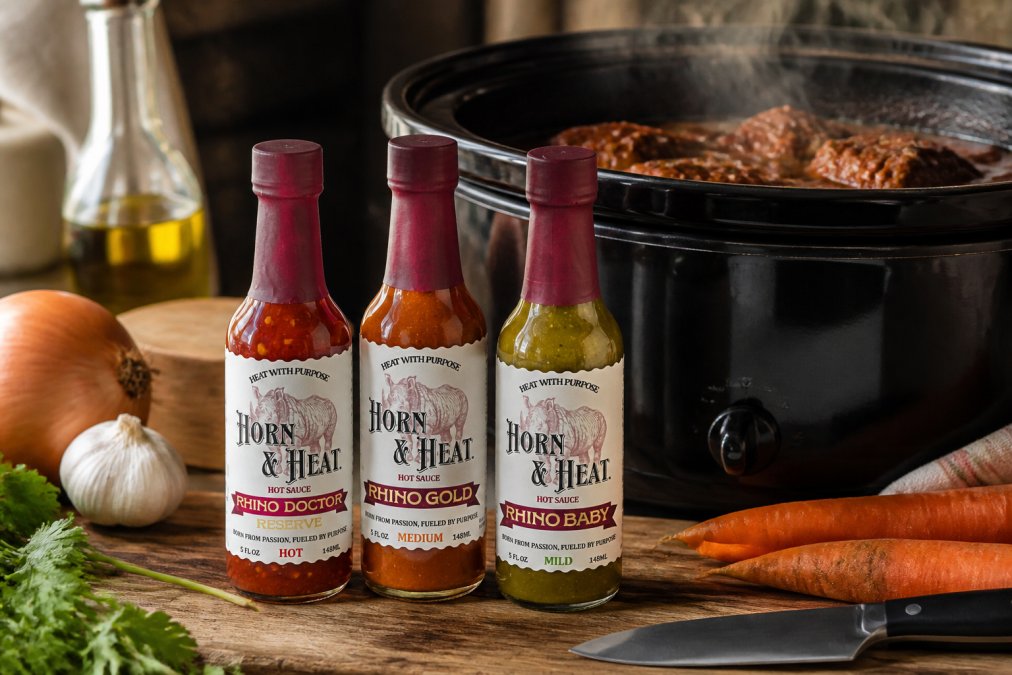
Horn & Heat crafts small-batch sauces built for everyday cooking, from mild Rhino Baby to the layered heat of Rhino Gold and the sweet-spicy versatility of Rhino Nectar Piri Piri Hot Honey. Each bottle is designed to be used throughout the cooking process, and proper storage keeps every drop as vivid as the day it was bottled. Get started with Horn & Heat and taste the difference that chef-crafted, conservation-minded sauces bring to your kitchen.
Frequently Asked Questions
How long can I store artisanal hot sauce after opening?
Most artisanal hot sauces last 3-6 months in the refrigerator after opening, depending on acidity level and ingredient composition. Vinegar-based sauces typically last longer. Always store in an airtight container and check for signs of spoilage before each use. For maximum shelf life, keep the bottle away from temperature fluctuations and direct sunlight.
Should I store hot honey differently than hot sauce?
Yes. Hot honey's higher sugar content makes it shelf-stable longer than most hot sauces, often lasting 6-12 months unopened at room temperature. Once opened, hot honey benefits from cool, dark storage conditions to maintain flavor and prevent oxidation, but refrigeration can accelerate crystallization. Hot sauces with vinegar-based formulas should be refrigerated immediately after opening. Both benefit from airtight containers.
What are the signs that artisanal sauce has lost its freshness?
Watch for mold growth, cloudiness, off-odors, or separation that doesn't recombine when shaken. Changes in color, unusual bubbling, or a sour smell beyond the sauce's normal acidity indicate bacterial growth or spoilage. Taste should remain consistent; any sour or fermented flavor beyond intended profile suggests the sauce is past its prime. When in doubt, discard the sauce to avoid food safety risks.
Does acidity and pH level affect how long artisanal sauce stays fresh?
Absolutely. Higher acidity (lower pH) acts as a natural preservative, extending shelf life significantly. Sauces with vinegar or citrus as primary ingredients typically last longer than those relying on fresh peppers alone. pH testing kits can verify preservation levels, with foods below pH 4.6 considered safer for longer storage. Understanding your sauce's pH helps determine appropriate storage duration and refrigeration needs.