
Using Hot Sauce in Creamy Pasta Sauces: A How-To
Last Updated: October 23, 2026
Quick Summary
Start with 1 teaspoon of hot sauce per 2 cups of finished creamy pasta sauces, then taste and add more in 1-teaspoon increments. Add it near the end of cooking, after the cream has thickened but before the sauce comes off the heat, so the bright pepper notes survive.
- For medium heat, use 2 teaspoons per 2 cups; for hot, 1 tablespoon per 2 cups.
- Split the addition: stir in two-thirds about 5 minutes from done, then the rest off the heat.
- Temper hot sauce by whisking warm cream into it first so the dairy never turns grainy.
- Tomato cream takes the most heat at 1 tablespoon per 2 cups; milk-based white sauce takes 1/2 to 1 teaspoon.
- If a batch gets too spicy, add cream or milk rather than water to cool it down.
Table of Contents
- Why Hot Sauce Works in Creamy Pasta Sauces
- How Much Hot Sauce to Add to Pasta (Start Low, Build Up)
- When to Add Hot Sauce to Pasta Sauce for the Best Flavor
- How to Add Hot Sauce Without Splitting or Thinning the Cream
- How to Balance Spicy Cream Sauce: Heat, Acidity, Salt, and Richness
- How to Make Pasta Sauce Less Spicy (Without Losing Flavor)
- Matching Hot Sauce to Different Creamy Bases and Pasta Shapes
- Conclusion
- Frequently Asked Questions
Why Hot Sauce Works in Creamy Pasta Sauces
Hot sauce works in creamy pasta sauces because acid and capsaicin cut through fat. Cream coats the tongue; vinegar-based heat lifts that coating and lets other flavors come forward.

Creamy pasta sauces are rich by design, and richness flattens flavor fast.
Most guides treat hot sauce as a topping. That is the mistake. Added at the right moment and in the right amount, it becomes part of the sauce itself.
How Much Hot Sauce to Add to Pasta (Start Low, Build Up)
Start with 1 teaspoon of hot sauce per 2 cups of finished cream sauce, then taste and add more in 1-teaspoon increments. Cream sauces are dilute, so heat spreads quickly and a little goes further than most cooks expect.
A practical progression:
- Mild base: 1 teaspoon per 2 cups. Flavor first, gentle warmth.
- Medium: 2 teaspoons per 2 cups. Noticeable heat that still lets the cream speak.
- Hot: 1 tablespoon per 2 cups. For palates that want the pepper to lead.
Add the sauce off the heat or at the very end of cooking, and taste after each addition. Once the heat passes the point you want, the only way back is more cream, which dulls everything else.
When to Add Hot Sauce to Pasta Sauce for the Best Flavor
Add hot sauce near the end of cooking, after the cream has thickened but before the sauce comes off the heat.
What timing actually does
Hot sauce carries two things that behave differently under heat: volatile aroma compounds from the peppers, and acid from vinegar or fermentation. Aromatics fade fast; hold a cream sauce at a simmer for ten minutes after adding a vinegar-forward sauce and the bright top note flattens. Acid stays and concentrates as moisture cooks off, so a sauce seasoned early can taste sharper at the end than at the start.
Early addition gives depth but costs aroma; late addition keeps the pepper bright but the two never fully marry. The fix is to split the addition.
The two-stage method
- Stage one, for depth. When the sauce is about 5 minutes from done, stir in roughly two-thirds of the hot sauce you plan to use. Let it simmer gently so the pepper flavor melds with the dairy.
- Stage two, for lift. Pull the pan off the heat, taste, and stir in the remaining third. This restores the bright top note the simmer cooked away.
Taste between stages. If stage one already reads as hot as you want, skip stage two.
Timing by base
- Alfredo-style (butter, cream, parmesan): The cheese is salty and the butter is rich, so the sauce can take a little more heat than you expect. Add stage one when the parmesan has melted and the sauce coats a spoon; adding hot sauce to unmelted cheese can make the sauce grainy.
- Tomato cream: Wait until the tomatoes have cooked down and lost their raw edge. Hot sauce added before that point gets buried under the tomato's acidity.
- Cream cheese or sour cream bases: These are the most heat-sensitive. Sour cream can break if it boils, so add both stages off the heat and keep the pan below a simmer.
When not to add hot sauce at all
If the sauce will be held warm for a long time or reheated the next day, add the hot sauce after reheating.
How to Add Hot Sauce Without Splitting or Thinning the Cream
The safe method is to temper the hot sauce first: whisk a spoonful of the warm cream into the hot sauce in a small bowl, then stir that mixture back into the pan.
The steps:
- Pull a ladle of hot sauce from the pan into a small bowl.
- Whisk the hot sauce into that ladle of cream, a few drops at a time.
- Return the tempered mixture to the pan and stir gently.
- Keep the heat low. Do not boil after adding.
Thinning is a separate problem. Vinegar-based hot sauces add liquid, and a loose sauce gets looser. Reduce the cream a little further before adding, or use a thicker, pepper-forward sauce with less vinegar volume.
How to Balance Spicy Cream Sauce: Heat, Acidity, Salt, and Richness
A balanced spicy cream sauce hits four notes at once: heat, acid, salt, and fat. When one dominates, the sauce tastes flat or harsh, even if every ingredient was good on its own. Here is how to correct each:
Problem |
What It Tastes Like |
Fix |
|---|---|---|
Too much heat |
Sharp, burning, one-note |
More cream or butter, plus a pinch of salt |
Too much acid |
Sour, thin, mouth-puckering |
A splash more cream or a small knob of butter |
Too little salt |
Bland, muddy, heavy |
Salt in small pinches, tasting between |
Too rich |
Coating, cloying, tiresome |
A squeeze of lemon or a dash more hot sauce |
Heat and acid are not the same thing. A vinegar-forward hot sauce adds both at once, so a sauce that tastes sour may need less sauce, not more salt. For a deeper look at how acid and heat interact, see this guide to balancing heat and acidity in gourmet cooking.
Richness is the easiest note to overload. Cream, butter, and cheese all push in the same direction. If the sauce feels heavy, the answer is usually acid, not more seasoning.
How to Make Pasta Sauce Less Spicy (Without Losing Flavor)
To cool down an overspicy cream sauce, add more dairy or stir in a mild ingredient that carries flavor without heat. Do not add water; it thins the sauce and dilutes the taste.
The best fixes, ranked by how little they change the dish:
- Add cream or milk. The classic move. It spreads the capsaicin across more fat.
- Stir in a spoon of cream cheese or sour cream. Adds body and richness at the same time.
- Add more pasta and sauce base. Stretches the whole batch rather than fighting the heat.
- Finish with a mild, flavorful hot sauce. Sounds odd, but a low-heat sauce with real flavor rebalances the profile.
That last point matters. For cooks who want to explore that end of the range, this guide to mild flavorful hot sauce for beginners covers the options.
Matching Hot Sauce to Different Creamy Bases and Pasta Shapes
Different cream bases carry heat differently, and the pasta shape decides how much sauce clings to each bite.
Starting amounts by base (per 2 cups of finished sauce)
These are starting points, not rules. Taste after each addition and stop when the heat sits just behind the dairy.
Base |
Starting amount |
Why |
|---|---|---|
Alfredo-style (butter, cream, parmesan) |
1 to 2 teaspoons |
Salty, rich, and thick; the cheese buffers heat and the butter carries pepper flavor well |
Tomato cream |
1 tablespoon |
Tomato's acidity and sweetness stand up to more heat without the sauce tasting sharp |
Cream cheese or sour cream |
1 teaspoon |
Tangy and thick; too much heat fights the tang and the sauce can break if pushed |
Milk-based white sauce |
1/2 to 1 teaspoon |
Light and delicate; heat reads fast and can bury the dairy |
Dairy-free cream (cashew, oat, coconut) |
1 teaspoon, added off heat |
Plant bases vary widely in sweetness and body; add late and taste often |
How each base behaves
- Alfredo-style: The most forgiving base. Parmesan brings salt, butter brings fat, and both soften the edge of a hot sauce. A medium-heat sauce with fruity or tropical notes balances the cheese; a vinegar-forward sauce can make an already salty Alfredo taste sharp, so use less.
- Tomato cream: The most heat-tolerant base. Tomato's acidity and sugar give a hotter, vinegar-forward sauce something to push against, and a complex, fermented sauce earns its place here.
- Cream cheese or sour cream: The tangiest base. A mild, herbal sauce keeps the tang in front. Add off the heat; sour cream can turn grainy if it boils after the hot sauce goes in.
Pasta shapes and how much sauce each bite carries
- Linguine and spaghetti: Long strands carry a thin, glossy sauce well; a heavy sauce slides off.
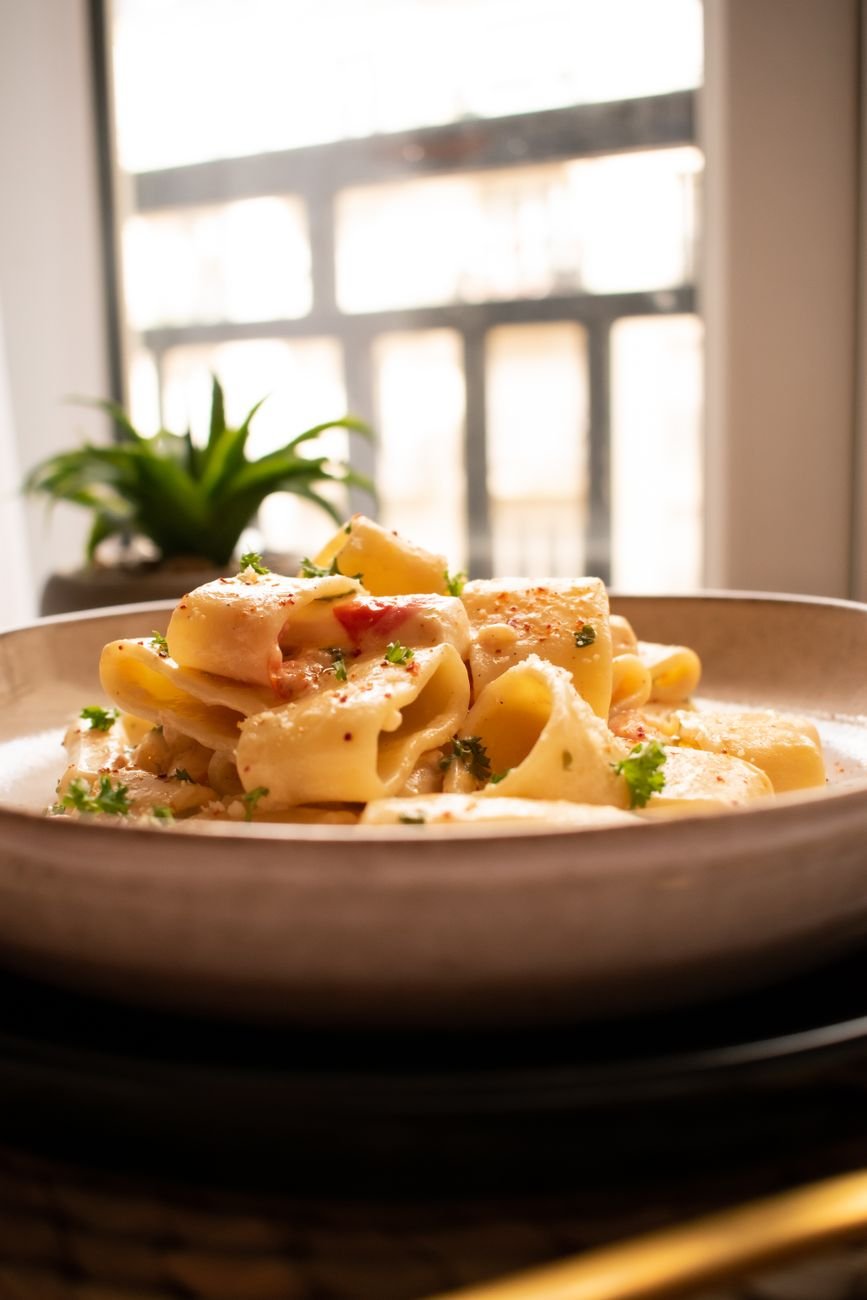
- Pappardelle: Wide ribbons hold heavy, rich sauces, so this is the shape for a thicker Alfredo or tomato cream with more heat built in.
- Penne and rigatoni: Tubes trap sauce inside, so a little heat goes a long way. Reduce the amount slightly compared with a flat shape.
A repeatable way to choose a bottle
- Name the base. Rich and salty (Alfredo) tolerates more heat; light and delicate (milk-based) tolerates less.
- Name the dominant flavor you want to keep. Cheese, tomato, tang, or dairy. Pick a hot sauce that supports it rather than covering it.
- Start at the low end of the table above. Add in small increments and taste.
- Adjust for the shape. Tubes and shells concentrate the sauce, so use slightly less; long strands and ribbons can take slightly more.
For cooks who want to compare styles side by side, the Horn & Heat Hot Sauce Trio bundles the mild, medium, and hot bottles together, a practical way to test which heat level suits an Alfredo versus a tomato cream. This flavor-first guide to hot sauces for cooking breaks down which styles work best in cooked dishes.

A medium-heat sauce like Rhino Gold is the versatile pick for most cream sauces, since its balanced profile does not overwhelm the dairy.

Conclusion
Getting hot sauce right in a cream sauce comes down to restraint and timing.
Horn & Heat builds its sauces for exactly this kind of cooking, with a mild-to-hot range that lets a cook match the bottle to the dish.
For more tested ways to cook with these sauces, shop the full lineup to find the heat level that fits your kitchen.
Frequently Asked Questions
Does hot sauce curdle cream sauce?
It can if you add a lot of vinegar-heavy hot sauce to cream over high heat. The acid and sudden temperature change cause dairy proteins to tighten and separate. Lower the heat before adding sauce, stir it into a small spoonful of the cream first, then whisk that mixture back into the pan. Sauces built with cream cheese or a little starch hold up better than thin milk-based ones. Add hot sauce in small amounts and taste as you go.
Can you add hot sauce to Alfredo sauce?
Yes. Alfredo is rich and mild, so it takes heat well. Start with a teaspoon of a medium sauce like Rhino Gold per two servings, stir it in off the heat, and taste before adding more. A hotter, more complex option such as Rhino Doctor Reserve works too, but use half as much. Keep the garlic and cheese flavors in front by adding sauce late in cooking rather than letting it simmer.
How do you keep spicy cream sauce from tasting too hot?
Balance the heat with fat, salt, and acid. Stir in a splash more cream, a knob of butter, or a spoonful of grated cheese to soften the burn. A pinch of salt and a squeeze of lemon sharpen the flavors around the heat. If it is still too hot, add more pasta and sauce base to stretch the batch, or serve it over plain pasta and let people adjust their own bowl.
What flavors balance heat in creamy pasta?
Fat and dairy are the main counterweights, which is why cream, butter, and cheese work so well. Garlic and onion add savory depth, lemon or white wine vinegar brings lift, and a little sweetness from caramelized onion or hot honey rounds out sharp edges. Fresh herbs such as basil or parsley add brightness at the end. Taste after each addition so the heat stays in balance with everything else.